OTHER INTERESTING PHONO STAGES
I have generally been unsatisfied with the "selection" of separate phono stages listed below. In the current market, the consumer appears generally to have a choice of either low-quality models that are very cheap, or high-quality (not state-of-the-art) units that are usually overpriced.
There are also a few interesting designs that are not in either of the above categories, but I haven't had the opportunity to audition them. The published "reviews" of these particular models are not trustworthy either, in my opinion. Accordingly, I have decided to mainly focus on the used preamplifiers from the 1980s and early 1990s. Some of these models had excellent (for their time) phono stages. There is some good news though: The two finest (stock) models were both made in the last few years though, which is definitely encouraging.
For me, the "Ideal Phono Stage" would be totally self-sufficient, which means it could drive, by itself, an entire audio system dedicated to a phono front-end source, without any need for further pre-amplification (a line-stage). My own (modified) preamplifier is, in effect, the end result of my unsuccessful effort to find such an ideal model in the audio market place.
Top(EXTREMELY MODIFIED* ONLY)
This (now) phono stage, which began its "life" as a traditional preamplifier many years ago, has been continually upgraded and modified for over 25 years. Despite numerous challenges and comparisons from the finest preamps and phono stages that I, and my associates, could find, it has remained my personal "Reference" since 1989. To be succinct: My JP-80 has been, and is now, the finest MM phono preamplifier I've ever heard. While it will be "impractical" for some systems, it works extraordinary well in my system, and any other that is similar to it in design.
*And, in practice, only if used with the Bent Silver MC SUT.
My current "reference" JP-80 uses only two tubes in the signal path, both of them a 12AX7. The other four signal path tubes in the stock JP-80 have been removed (all 3 in the line stage and the phono stage cathode follower). There is a V-Cap CuTF Teflon capacitor (.47 uf) coupling the two remaining tubes and another V-Cap CuTF Teflon (1 uf) at the output of the second tube.
The RIAA equalization is accomplished with feedback, using Stanley Lipschitz's formula. All of the power supply capacitors are film based. Only the selector switch is still in the direct signal path, with every other switch now bypassed. The volume control, which is resistor based, is now only a shunt to ground, so it is not in the direct signal path. In fact, there are no resistors in the entire direct signal path*.
The complete JP-80 direct signal path is now this: RCA inputs - 12AX7 - V-Cap Teflon - 12AX7 - V-Cap Teflon - Selector Switch - RCA outputs.
*For the most complete description of the modifications I have performed on the JP-80, please go to The Modifications File. However, I can't stress enough that no one should even attempt these modifications, some of which are extreme, without a great deal of knowledge and experience in such matters.
I made several comparisons between these two models (A/B/A/B/A). The system was exactly the same, with the single exception of the MC SUT. The JP-80 used the Bent Silver, while the Statement obviously used its own internal transformers. (The separate Statement MC Transformer had a serious hum problem with the Jadis at the time.) It is critical to note that both of these phono stages went directly into the amplifiers, so no Line Stage was ever used. Further, Coincident has since changed the output capacitor (to a Solen Teflon) in the current model.
So, after all the comparisons, using my most familiar and challenging recordings, which was better?
The Jadis JP-80. The differences between them were not huge or "dramatic", but they were still important, and very similar in type to the what I had heard when I directly compared the original Coincident Frankenstein amplifier to the current version (with the shiny stainless steel chassis). The JP-80, when compared to the Statement, was...
1. A little cleaner, faster and immediate.
2. A little more delicate and detailed.
3. A bit more defined, extended and solid in the bass.
4. A little more organized and less homogenized.
5. A little more dynamic, and
6. The sound-floor was also a little lower.
Overall, the Jadis was more refined, natural and less "electronic". In degree, after taking into account the Statement's (tiny) SUT advantage, I would say the differences I heard between the two MM phono stages were somewhat more noticeable than those between the two Frankenstein amplifiers mentioned earlier. If I employed the same analogy I used with them, I would say that the Jadis JP-80 was the "next page or two", but definitely not a "new chapter".
Of course, I must also point out that the Jadis had only one volume setting, so I couldn't adjust it to sound its best with high-cut records. It also had less gain that the Coincident, which created another problem with my low-cut records. "Practicality" obviously favored the Coincident, but the comparisons were "best to best".
In general, the Jadis JP-80, as currently modified, combines the most desirable qualities of the finest triodes with the basic strengths of the fastest and purest transistor models (Spectral). In short, the JP-80 is the closest to "the best of all worlds" ideal that I've yet heard from a phono stage or, in other words, it's "like nothing is there". It is very similar in nature to the (latest version) Coincident Frankenstein and the matching Statement Line Stage, which also provide that same ultra-rare sense of a complete absence of an "electronic character".
I can understand some readers being frustrated, like Ken Stevens, because my top reference phono stage is something that is extremely difficult to obtain, and even if it is, it must be placed in a system that is specifically designed to accommodate it. However, I can promise you that "frustration" is not my intent. This high level of performance exists, and it would be a dereliction of my obligations as an audio journalist to minimize or, even worse, ignore this reality. Even more importantly, there are scientific and technical reasons why these sonic differences exist, and they should be discussed.
So, after all these years, the Jadis JP-80, albeit heavily modified, is still at the top. While this may appear strange, or even impossible, to an audiophile who only follows the mainstream audio press, it isn't unusual in "real life", where advancements don't automatically materialize every month or year. (However, it is critical to note that the Jadis was always kept "up to date" over the years with further modifications.)
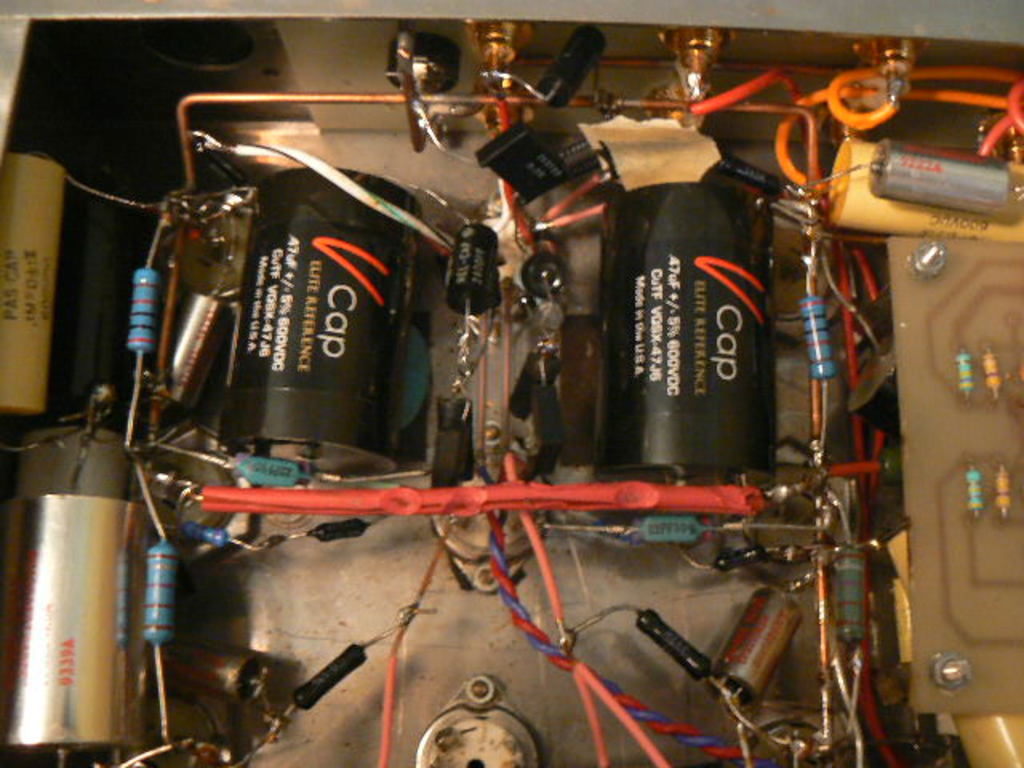
Posted below are pictures of the insides (the "guts") of my current JP-80 "phono stage". What readers will see may look "messy", but it is the result of hundreds of modifications over a 25 year period. Was it all worth it? Definitely, because I know of no other phono stage, commercial or otherwise, at any price, that is its overall equal when it comes to reproducing music naturally and completely. It's admittedly impractical to exactly duplicate all the modifications of this JP-80, but that is irrelevant to me at this time.
Explanation- This is a close-up of the two (.47/600V) CuTF capacitors that were most recently installed, in May 2014. As can be seen, they barely fit between the space of tube sockets #1 and #2. Also...
1. The RCA inputs, for the phono source, are at the very top of the picture, and the furthest to the left of the three inputs that can be seen. A 47K Vishay loading resistor can also be clearly seen between the top RCA inputs.
2. The various Silver capacitors, on either side of the CuTF caps, are REL Teflons. They were originally the signal caps themselves 10 years ago. Now they are (the critical) "de-coupling" capacitors, providing filtering and quick energy to the circuit.
3. The tiny resistors and caps between the two CuTF caps, and connected to tube sockets #1 and #2, are the JP-80's RIAA equalization feedback loop. The current RIAA values are those recommended by Dr. Stanley Lipschitz.
4. The third tube socket, seen partially at the very bottom in the middle, was meant for the "cathode follower tube". However, it is not being currently used. Removing the cathode follower (20 years ago) provided a huge improvement in sonics, but at the price of far less direct amplifier drive capability. It is the reason why this phono stage can not directly bi-amplify without "assistance" from either a "buffer" or an active line stage.
5. Observant readers will notice some "collateral damage" on the red plastic insulation, protecting the copper grounding bar bridging the two channels. This was obviously caused by a "rogue" soldering iron.
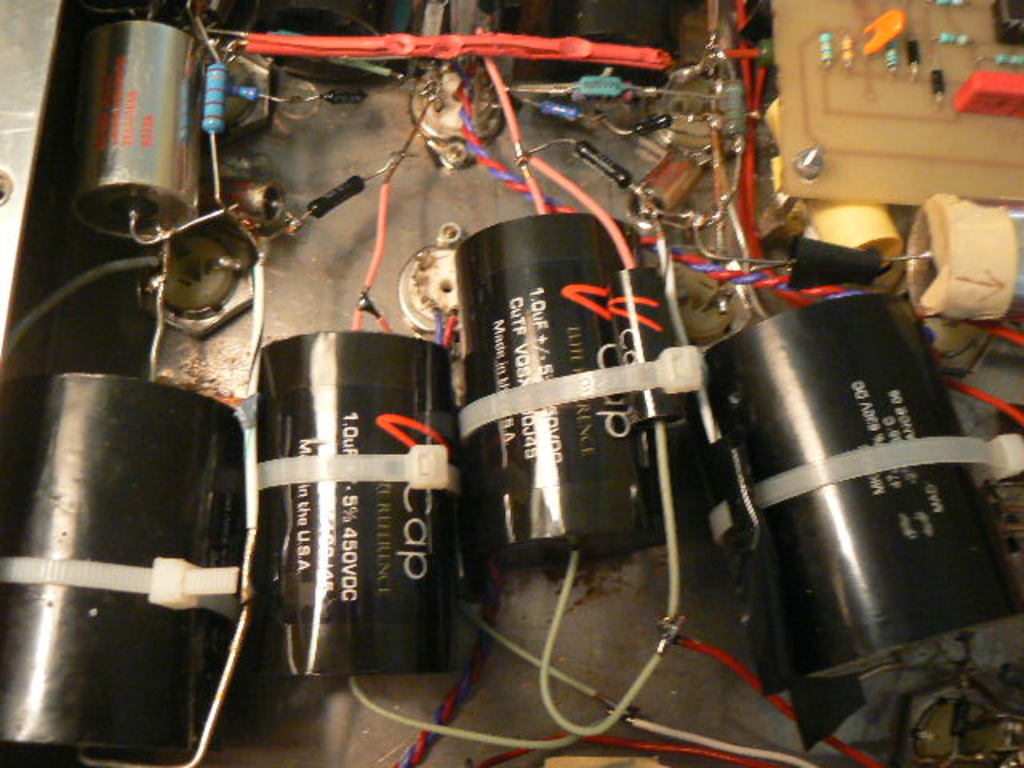
Explanation- These are the two 1uf/450V CuTF output capacitors that were installed in 2013. Readers should also notice they have a .01 uf bypass cap as well, though one of them is obscured. Also...
1. The two huge caps, on either side of the CuTF caps, are 47 uf Solen de-coupling caps, providing local energy and filtering to the circuit. They were the largest value I could fit. They are augmented by smaller values as well, including REL Teflons (upper left).
2. All four large caps are anchored down to the chassis (notice the plastic ties). This is to prevent them from moving and vibrating in sympathy with exterior vibrations. Any vibrations can cause noticeable distortion and other sonic problems. Fortunately, the "antidote" is quite cheap and available at any hardware store. Caveat- If the ties are too tight, they can compromise the dielectric. Also, two ties may be better than a single tie in the center.
3. The signal from these output caps goes directly to the selector switch (not seen), and then directly to the RCA outputs (not seen). The two volume pots (not seen), along with everything else, are bypassed. The load to ground on these output capacitors is 10 million ohms.
4. The 47 uf Solen caps are "metallized" film. If they were "film and foil" (like the signal caps), they would be much too large to fit into the chassis.
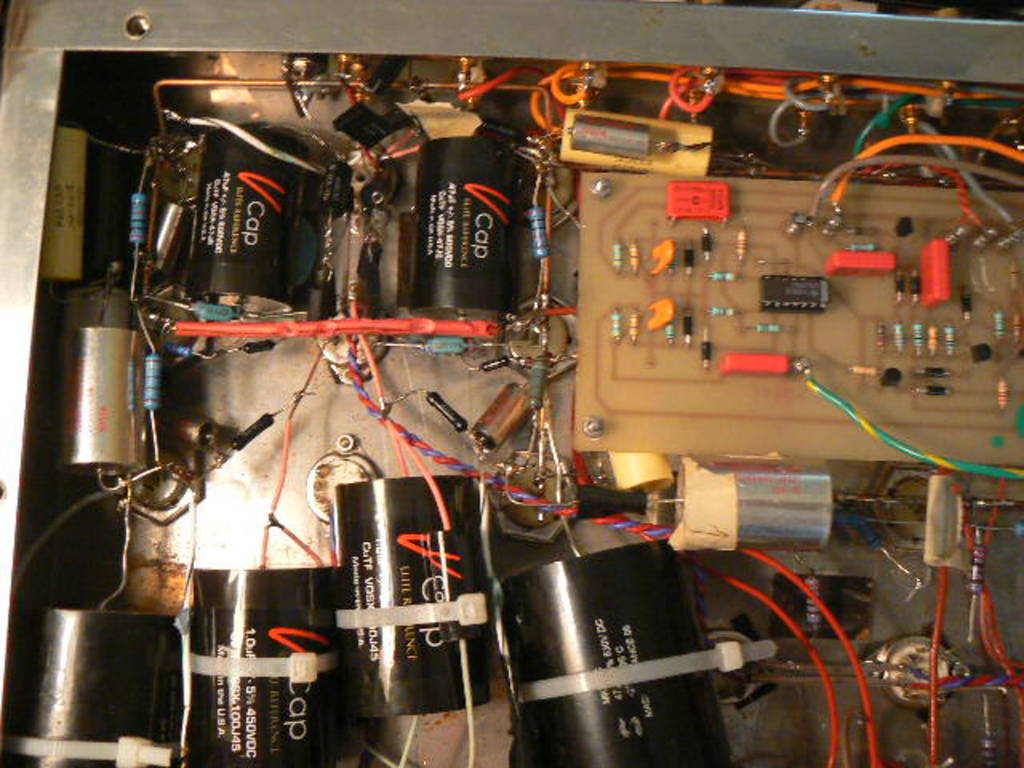
Explanation- This is the complete circuit of my modified and gutted Jadis JP-80. The existing direct signal path is this: RCA Inputs - 12AX7 - .47 uf CuTF - 12AX7 - 1 + .01 uf CuTF - Selector Switch - RCA Outputs. (The selector switch and RCA outputs can not be seen in this picture.) Also...
1. The JP-80's (mediocre) line stage, seen partially at the bottom right (tube sockets #4 and #5), has been bypassed for more than 20 years now.
2. The circuit board on the right, which contains the muting circuit, has been bypassed. (This is potentially dangerous, since powerful pulses are generated when the Jadis is turned ON or OFF, deliberately or not.)
3. The 1 uf CuTF caps are not quite twice as large as the .47 uf caps because they are built with a lower voltage specification; 450 V compared to 600 V.
4. There is not even one resistor in the direct signal path. (Only in the RIAA feedback loop, ground loading and power supply.)
The Coincident Statement (CSPS) is the finest commerically available phono stage I've ever heard. It is also superbly built (two chassis, hard-wired, 61 lbs combined), and it has the added flexibilty of high quality volume controls, and even an extra input, for those who do not want a line stage, for whatever reason, in their system. There's also a mute switch, and even two sets of outputs for biamping. The Statement currently sells for $ 5,500, though that price may change, without notice, because of volatile exchange rates. (For more such details, and pictures, you can go the Coincident website.)
As configured, the CSPS is only meant to be used with low output MC cartridges. This is because it has internal MC SUTs, which are the exact same as are used in their (Class A Upper) Statement Transformer, along with the same loading options. In my own system, going direct, I was never able to use all the available gain, even with the lowest cut records. Its actual performance is relatively easy to describe, which is usually the case with electronics that are outstanding compared to their peers, and have no obvious weakness(es), and/or compatibility problems (like SET amplifiers).
The CSPS is highly neutral (or "characterless"), very clean, extended at both frequency extremes, virtually noiseless, highly dynamic, fast, detailed and large sounding, yet with excellent focus, and has a very low sound-floor. Importantly, it is never adversely effected by loud and complex recordings. If the CSPS has any obvious "weak link", I, and my associates, were never able to hear it, and I used a wide variety or recordings to expose it on an ultra high-resolution system. In short, the Statement excelled in every area.*
The only real problem I ever had was when my initial MC loading was set too low, so the sound was "dead" for a while. Once I raised the setting one and then, later, two clicks up, that "problem" completely disappeared. The lesson here is obvious; always experiment yourself to find the optimum setting.
*I have been informed that the output capacitor in the CSPS has been changed from a Mundorf, which I heard, to a Solen Teflon, which should provide an improvement. I haven't heard the latest version with the Solen.
When it comes to phono stages, the first audiophile choice is whether to "go direct" (into the power amplifier), using the phono stage alone (if even possible), or to add a line stage into the signal path. Assuming the latter, the next decision is whether to purchase a "traditional" preamplifier (phono and line stage combined), or separate units. Then comes whether to go tubes or transistors and, finally, the budget.
When considering everything (overall performance, flexibility and build quality), the closest competition to the CSPS is the Aesthetix IO Signature (with volume controls and a 2nd input). Unfortunately, this version of the IO sells for $ 11,500, which is more than double the CSPS. However, in my opinion, their large difference in cost is due to the CSPS being an outstanding value for its selling price, and not because the IO is, in any manner, overpriced.
While "the basics" of the two models are similar, the circuits are very different; with the CSPS using a MC SUT and a two tube (per channel) signal path, while the IO uses tubes for everything, and has a much more complicated signal path (8 tubes per channel), though it does offer higher gain (but at the expense of higher noise). Both models have now passed "the test of time", which means you can't go wrong with either of them.
I haven't compared them myself, but from everything I've heard (and read) from other audiophiles (public and private), I believe the CSPS has a slight performance advantage (though with the trade-off of some gain). This is NOT "definitive", as it would be if I made the comparisons myself, on a high quality system I was familiar with. If I had to speculate, I would say that the extra (3rd) gain stage in the IO, which is one of the reasons why it costs more than the CSPS, also has a sonic "cost", along with the extra 14 db of gain. Replacing the IO's MC stage tubes on a regular basis, because they get noisy relatively quickly, may also be an important factor for some.
What about other "all-out" phono stages (since no less expensive, let alone "budget", model comes close to the CSPS in our experience)?
There are some other excellent models available (like the Manley Steelhead), but none of the models I'm familiar with match the performance, let alone the cost/performance/ratio, of the CSPS. The one possible exception is a (two chassis) "custom model" made by (the late) Tom Tutay, which impressed me when I heard it briefly in my own system a few years back. The "basic model" cost $ 3,600 at the time, with (extra cost) options of Teflon caps, extra inputs etc. It has 60 db of gain, and uses tubes in the MC stage. It's very well built, but quite rudimentary in appearance.
This brings us to the other option: Traditional Preamplifiers (with MC stages). Here, when not counting "custom-made models", there are two models, with prices at either extreme, which, in our experience, dominate the field. At the lower end is the Doge 8, which sells for less than $ 1,500. Considering everything (performance, build quality, flexibility, "looks" & inflation), the Doge 8 may be the best preamplifier value in the history of audio.
The only real competition the Doge 8 has, from between $ 1,000 to $ 5,000 (the CSPS), are from the best used preamplifiers of the past (MFA Luminescence, ARC SP-10/11, CAT etc.), and even then there will be trade-offs and "taste" involved. In fact, the second dominating preamplifier, which, we can finally state, is unquestionably better than the Doge 8, is in a completely different price league...
The Audion Quattro (4 chassis version) is still the finest traditional preamplifier we know of, but it sells for $ 15,000 (with the two chassis version selling for $ 12,000). As far as I know, there is also an extra charge, $ 2,500, for the all-out version with Teflon caps and better volume pots (which is the model that we designated "Class A" in our Reference Preamplifiers). It would be fascinating to compare the all-out Quattro with the CSPS and Coincident Statement Line Stage, but we know of no one, with complete objectivity, who has yet done so. (Audion also has standard phono stages, without volume pots, but we haven't heard them.) Finally, it may be important to note that the Quattro has no actual gain in its "line stage".
Below $ 1,000- Used models dominate, and there are plenty of choices; see Class C Phono Stages and (some) Class C Preamplifiers, plus new models like the Jasmine and some other interesting models, mainly coming from Asia.
$1,000 to $ 3,000+- The Doge 8 dominates here, and it is new, but some used models, from the 1980s and 1990s* (from ARC, MFA, CAT, Counterpoint etc), may be preferable to some audiophiles with specific tastes and requirements. The Doge 8 is a "game changer" and it's worth going over the budget to get it.
$4,000 and above- The Coincident Statement Phono Stage also dominates its price range, below and above. It's even good enough to make a time/money sacrifice and spend more than the original budget for it. Further, for those fortunate audiophiles with budgets of $ 10,000+, it is important to note that the Statement Line Stage could then be included in the deal. This would mean another 20 db of gain (more than matching the Aesthetix IO), and even improved sonics, as per my February 2011 review of the Line Stage.
$10,000 and above- There are three serious choices here: The Aesthetix IO Signature is a proven top performer and a safe choice. However, the combined Coincident Statement Phono/Line Stages cost $ 1,000 less, has even more gain, and most likely outperforms the IO to boot. Since it uses a MC SUT, there are also less (noise-prone) tubes to regularly replace. The final choice is the Audion Quattro, which is still the "champion" of its kind, but it costs $ 5,000+ more than the other two, and we don't know yet if that extra investment also gives you better sonic performance (though it definitely outperforms the "standard" IO). It also has less gain than either of them, and no gain in its "line stage".
*The phono stages from this era will be even better than we remember, since they were only heard with their own line stages, which were of varying quality. It's definitely possible that one (or more) of these models had an amazing phono stage, which was "sabotaged", at the time, by their own mediocre line stage. The superb line stages available today will finally allow them to shine.
In my experience, the Coincident Statement Phono Stage sets a new performance standard in the audio marketplace, at not only its own price point, but far above it. It can even be further improved with the addition of its sister Line Stage. For those audiophiles searching for the highest performance, combined with simplicity and outstanding value and build quality, the CSPS is the end of the proverbial rainbow.
This is the very first phono stage to ever receive a Class A Reference designation in the history of this website. We first heard this unit many years ago, but not at its best and not with a system with the high resolution available to us today. Once again, a group of my associates have made this particular evaluation. I was not part of that group. Their below assessment was written by the most literate of the group. It has some minor editing and my bold:
"This unit was used straight into a pair of mono amplifiers, which have the finest discrete resistor volume pots. The IO was loaded at 74 ohms and full out 80 db gain. The cartridge used was a Dynavector DV-1s. The loading options are many and varied, and will accommodate virtually any cartridge and system. That is the good news. The not so good is the absolute necessity of obtaining 4 very low noise 12AX7s for the high gain section. The user will also need 8 more 12AX7s of superb sonic quality, but somewhat less critical with regard to noise. Additional tubes such as a pair of good 6SN7s and two 6DJ8s will also be required. Since the IO is a very high gain, all tube phono stage, even with the lowest noise tubes, it will never be as quiet as SS or a low gain tube preamp mated to a step up transformer.
Once the appropriate tubes are installed, the magic starts to happen. Outside of the Audion Quattro*, this is the finest overall phono stage I have had the pleasure of auditioning. It does everything incredibly well. From the macro performance (wide dynamics, deep, articulated bass, impactful midbass with instrumental attack that can startle and excite) to the micro with its magnificent rendering of subtle harmonics and low level detail, the IO is at the top of its game in every area.
Other preamps, such as the highly regarded Manley Steelhead, sound compressed and not fully fleshed out by comparison. The IO reveals the Manley's transistor contribution to the sound, to wit, dry and grainy versus the liquidity and purity of the IO. The Steelhead, furthermore, sounds wimpy, as if your amplifier has had its power output cut in half. The only areas in which the Manley is superior are its user features, flexibility and lower noise (due to the use of Jfets and a step-up transformer), but the sonic penalty paid is severe. Be forewarned, the superiority of the IO (and the Audion Quattro) to the Steelhead is very evident, even on short audition (all the glowing reviews of the Steelhead in the audio press notwithstanding).
The IO is not quite the equal to the aforementioned Audion with regard to extracting the finest of subtle details from a recording and being tonally as neutral. No other phono stage in my acquaintance combines the overall strengths and relatively few flaws of the Aesthetix. It should be mentioned that it does require volume pots to be used straight into an amplifier, if the amp is not so equipped. Aesthetix does offer the unit with mono volume pots but the cost is steep ($2,500). Additionally, if a digital source is being used, in addition to phono, a line stage or passive preamp will be necessary.
The price of the IO is very reasonable given its superb construction, and a used IO in good condition can be a true bargain. The IO described in this review is the original, non Signature model, with a single power supply. This unit can be substantially upgraded, with the substitution of the stock REL, polypropylene coupling caps, to Teflon film and foil (which constitutes part of the Signature** version). The cost will be high (from $ 1,000 to about $1,800), as there are 20 caps to change. There is no doubt that the sonic upside would be quite noticeable.
To these ears, the Audion Quattro and the Aesthetix IO represent the finest of phono stages currently auditioned. Be prepared for tube rolling and maintenance with both of them, and try not to let the higher noise levels become bothersome, because once the stylus hits the groove, the reward is unmatched sonic glory."
Personal Footnotes:
*The Audion Quattro is a full preamplifier, so it is not included in this dedicated Phono Stage File. However, the Quattro is still a reference standard that we use to judge separate phono stages.
**The "Signature" has two power supplies, plus better parts. It's obviously going to outperform the model we heard.
Addendum- I've received two highly contrasting responses from readers concerning the above article. One audiophile not only confirmed our report, he also added that the Signature version is indeed a noticeable step up in performance over the standard model. He is very satisfied with his Aesthetix. However, another reader had serious reliability problems with his model, and ended up with a custom-made phono stage, which he is also very satisfied with (based on his description, it should be a "killer").
TopThis is (potentially) the finest separate phono stage ever made. It also has unusual versatility. It can be an entire preamp in a dedicated phono system since it even has an output attenuator that can be used as a volume control (though it doesn't provide small changes in volume).
It can (and should) be improved with modifications and is compatible with any cartridge, from very low to very high output. It was noticeably well built and has a huge separate power supply. Replacement tubes for the power supply are inexpensive. This was a true bargain in its day. (Just compare this model to the more expensive Audio Research SP-11 and SP-15 to discover true value.)
Counterpoint is now out of business, but its previous owner/designer, Michael Elliott, is still around to repair and/or update virtually all their different models, including the SA-9. Counterpoint came out with their own update of the SA-9 just before they went bankrupt. It was called the Magnum Opus. It is virtually the same unit, but with updated passive parts and esthetics. It is very rare and even more desirable. There is a link to Michael Elliott in the Links section.
Further- This unit has top Class B performance with low-output cartridges only with the Expressive Technologies Transformer as a step-up. Its own FET MC stage, while very clean and quiet, is "only" very good and reduces the overall performance of the unit to just above the Sakura, and slightly below the performance of the stock Aesthetix LO with acoustical music.
Caveat- While the SA-9 has proven to be generally reliable, I have recently discovered that some of their separate power supplies are developing a problem. Fortunately, this problem can be easily rectified with the simple addition of a (well placed) resistor. The details for this desirable fix can be found by contacting the Counterpoint website.
Further- I learned something more about the history of the SA-9 phono stage directly from "the horse's mouth", Michael Elliott. After some editing...
Counterpoint had just released the SA-11 line stage, a really large, "all-out", full tube, remote-control linestage and Elliott had started on the SA-9. This was about 1987. The marketing department, seeing how expensive the linestage was, urged Elliott to keep control over the cost of the SA-9. This was because CDs were coming on strong and vinyl looked to be obsolete in the near future. For political reasons, Elliott never expressed his reservations about CD sound quality (Counterpoint had a huge market in Japan where CDs were popular, being heavily reviewed and promoted by the big magazines, the big dealers and the big reviewers, so he was asked to keep silent). So Elliott ended up holding back the design. Where he had intended to use octal tube rectifiers, as in the SA-11, he used solid-state. Instead of using a big 41-position volume control, he installed a 6-position attenuator. Other areas also needed to be trimmed to fit the budget.
Of course, vinyl did go through some years of diminished sales and interest, but it rebounded. Elliott's happy that he has the opportunity to re-visit the SA-9 and he even claims he can make it sound better than his original design, before it was compromised by budget cuts. (8/03)
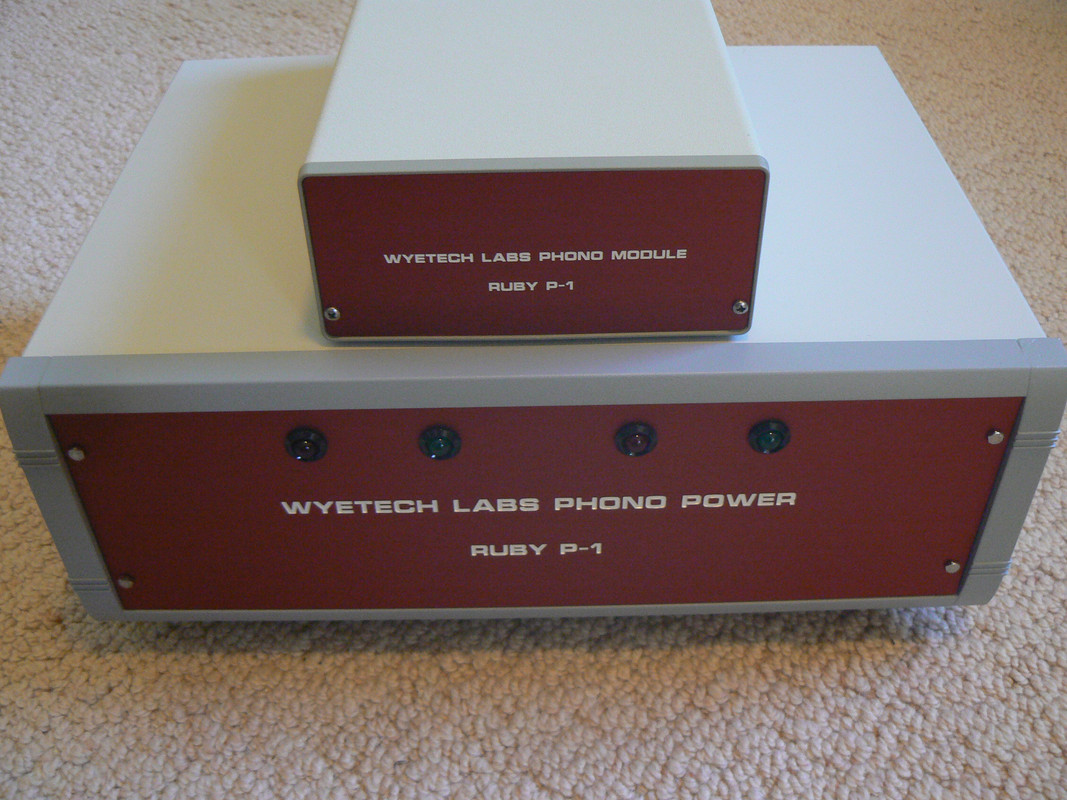
The Wyetech Ruby is the finest solid-state phono stage I have ever heard and it is also the most versatile, in gain, loading and filter settings. Three of my associates, all of them with decades of experience, have also heard the Ruby in my system, and at completely different times (which insured independence). These three associates agree with my overall assessment of the Ruby, even to the point of using very similar descriptive language of its strengths and weaknesses. The Ruby was completely broken-in before the auditions. I experimented extensively with different gain settings, and load settings, and this effort produced a noticeable sonic improvement, while also providing me the confidence that the Ruby was optimized (see below).
The Ruby's sonic performance is easy to describe: It is very fast, detailed, clean, quiet and neutral. It also has a large sound stage and good separation and focus, due, I assume, to its exceptional dual-mono power supply. The Ruby is the closest I've yet heard, in overall sonic performance, to the best tube models.
However, I must also note that the Ruby still does not have all the most desirable qualities that the best tube phono stages provide. Examples: The sound-floor is not quite as low as the finest tube units, which noticeably compromises decays, fluidity, harmonic bloom, micro dynamics and macro dynamics, so the Ruby sounds generally more "mechanical" by direct comparison. Also negatively effected are the reproduction of natural body and space.
The Ruby is still quite good in all these areas, but it was not equal to my top Class A Reference, the highly-modified Jadis JP-80/Bent Silver combination, when I made our direct A/B comparisons. I realize that these comparisons with the Jadis/Bent could be accurately described as "unfair" to the Ruby, especially considering the cost, let alone the extreme rarity, of the Jadis/Bent Silver, but this combination was all I had during the lengthy reporting period. Further, Roger Hebert, designer/owner of Wyetech, was OK with this choice of rivals.
The Ruby is also the most flexible phono stage I've yet experienced; in gain, loading and filtering, and it is user friendly in all those areas. The Ruby is very well built and all the required tools are provided, as well as an excellent operating manual with documentation (see pictures below).
It is also important to note that when I experimented with different gain settings, I surprisingly discovered that the Ruby sounded better with the (ZYX UNIverse II) cartridge going "direct" into it, with either 66 or 68 dB of gain, than by utilizing the Bent Audio Silver SUT and lowering the Ruby's gain to only 40 dB. This amazing result, which is unprecedented in my experience, means that even the finest MC SUT (or "head-amp") is redundant when using the Ruby.
The Wyetech Ruby is the best option I am currently aware of for those serious audiophiles who want the maximum amount of sonic benefits of using tubes, but without using tubes, and with no related compromise of the sonic benefits of using transistors. Further, the Ruby also has the added bonus that no step-up device will ever be required, regardless of the cartridge used. The Ruby retails for $ 5,900, which is obviously not "cheap". I believe the unique range and scope of the Ruby's sonic performance, plus its outstanding cartridge/system versatility, easily justify its price.
Further, while I placed the Ruby in Reference Phono Stages Class B (Upper), I also believe it is very possible that some audiophiles, in particular those that appreciate and value what tubes can do, will still prefer some tube models in the lower reference categories, which is why I emphasized "overall" when describing its general performance.
The Ruby is not "The Best" in my opinion, but it is "the best of its type" I've yet heard, for now.
Relevant Links:
"Class A" Phono Stages Review/Essay
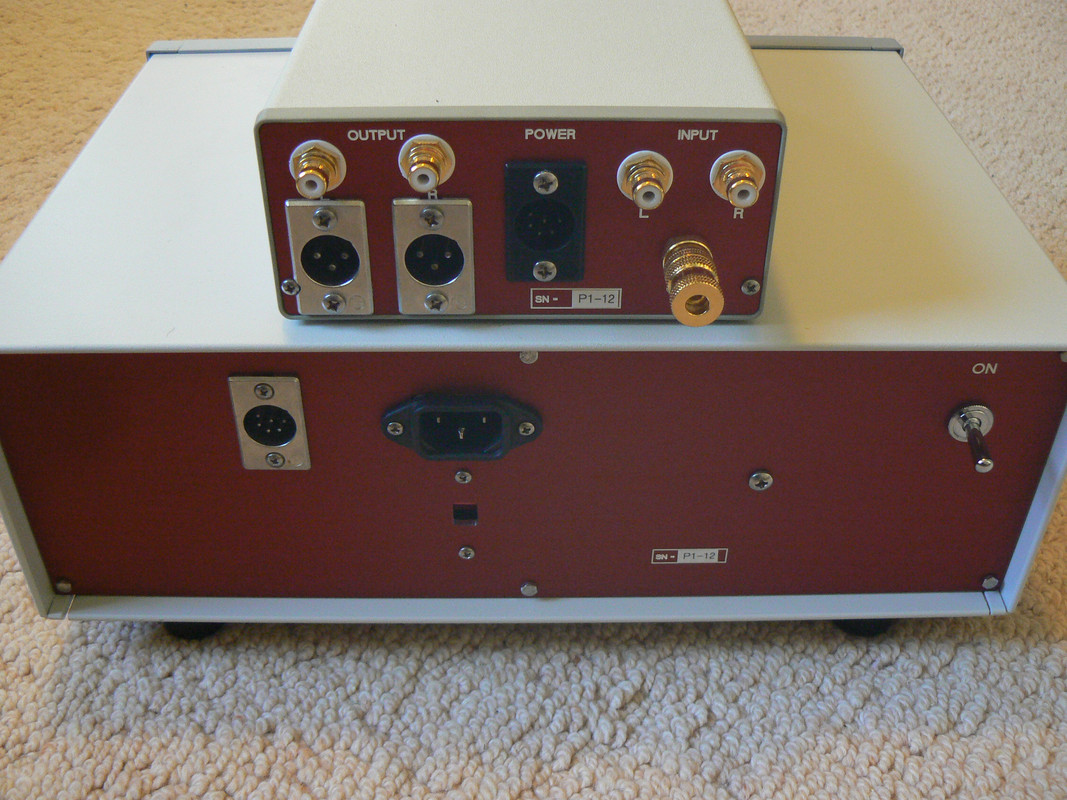
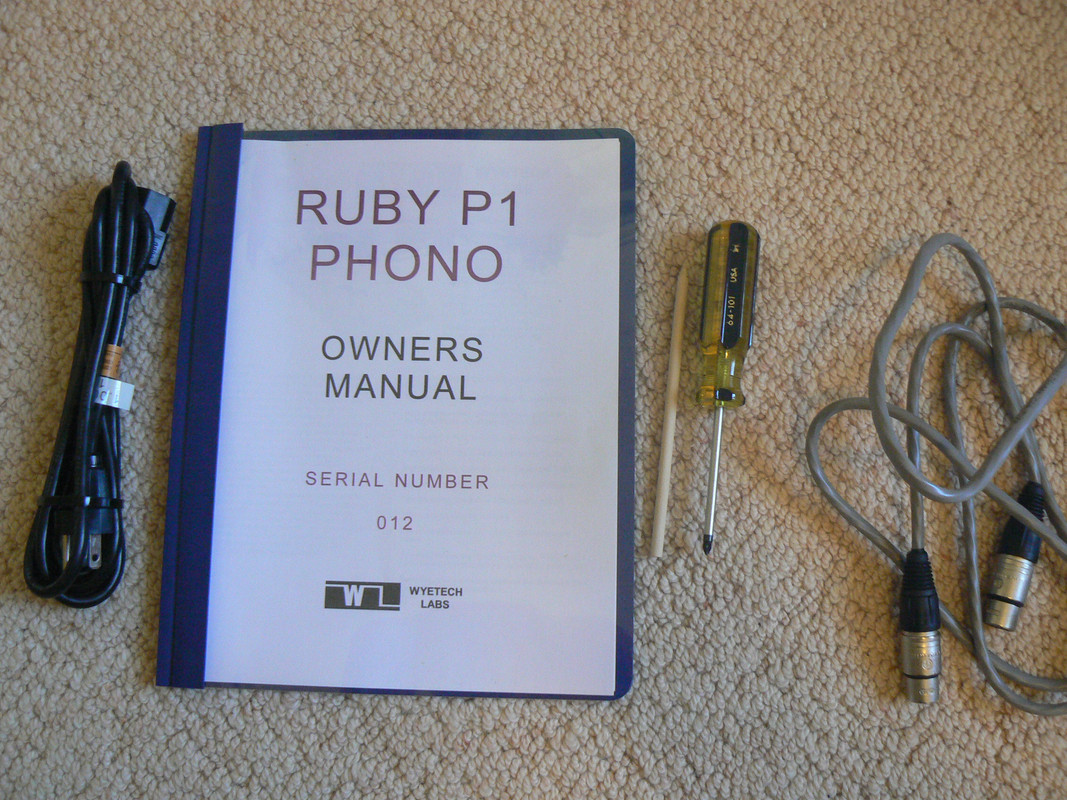
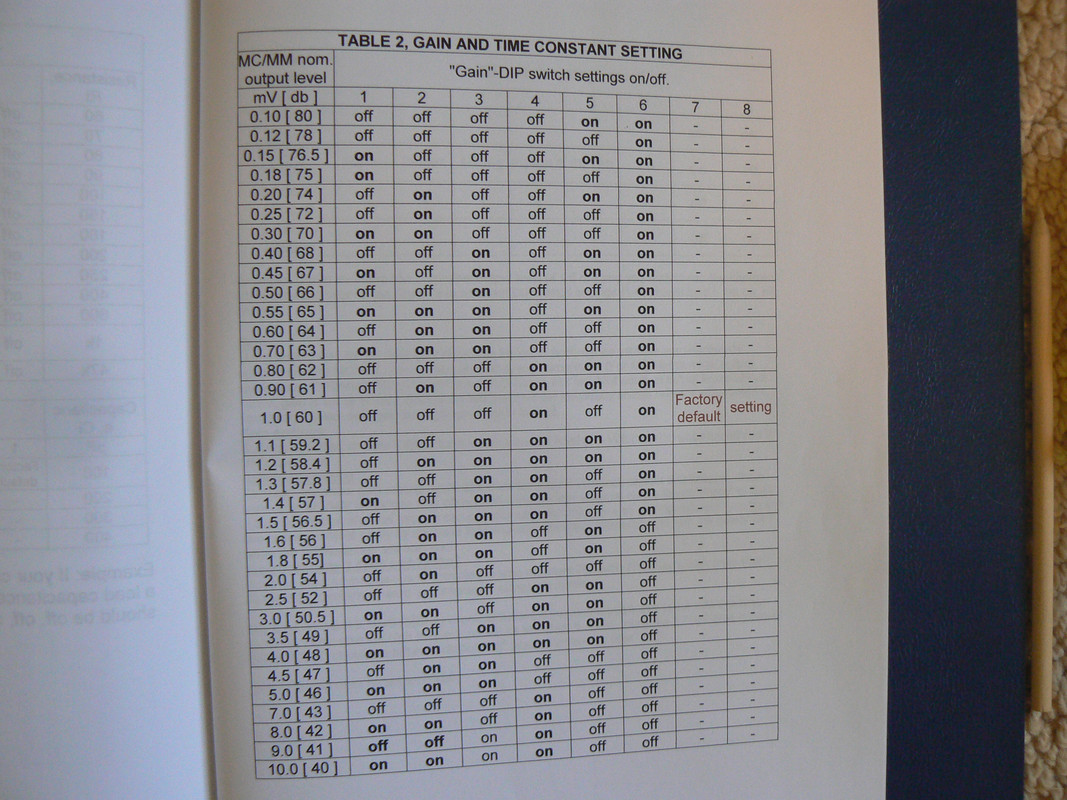
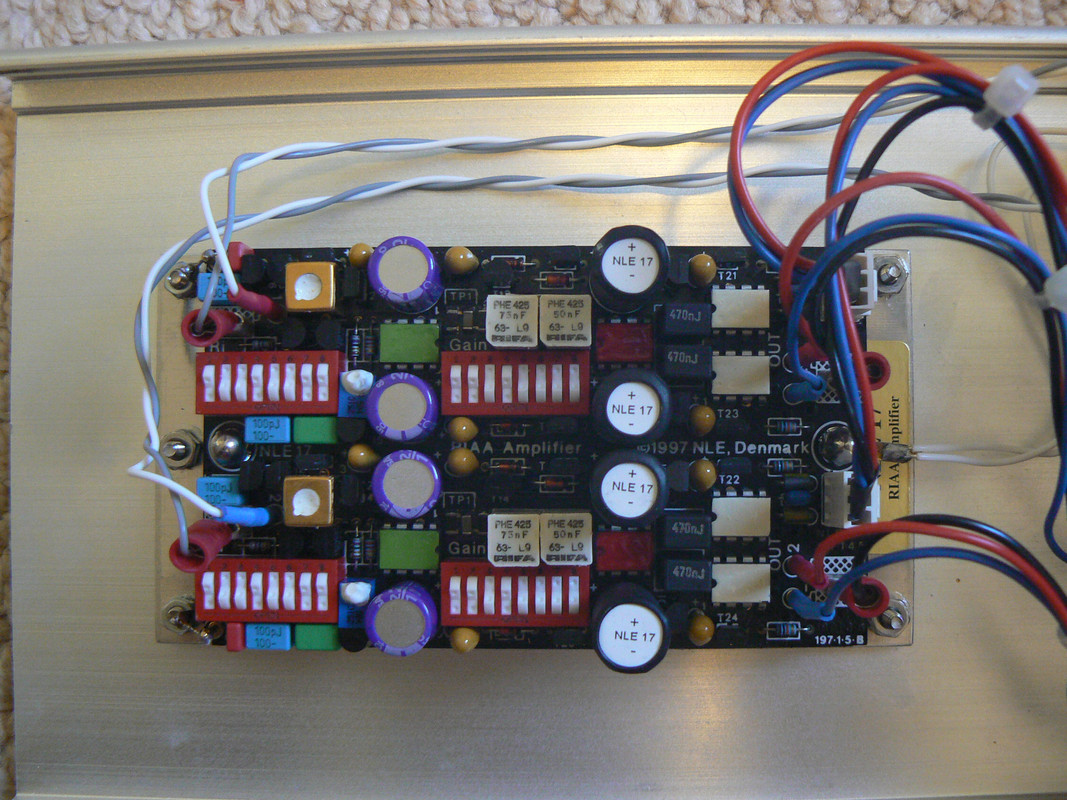
One of my associates felt that this phono stage was probably one of the finest of its type ever made, though that was when it was introduced. We overestimated its performance at that time, mainly because we, at that same time, underestimated the performance of the superior Aesthetix IO. While it's still very good, the Steelhead does not equal the phono stages of the Class A Preamplifiers, the IO or even the Counterpoint SA-9 after modifications.
It is important to note that this same audiophile has actually lived with all the different models mentioned above (with the exception of the Jadis JP-80). The Steelhead is expensive, but it is well built.
The Sakura is an entirely solid-state unit with adjustable (only at the factory) gain. No additional step-up is needed for low-output moving coils.
In the sonic arena, the Sakura almost equals the stock SA-9 in transparency, immediacy and dynamic qualities. This makes it a (solid-state) breakthrough, just like their power amplifier. Sadly, it has no volume controls, so a passive or an active line stage is still necessary.
The price of this unit has gone up to $ 3,900, and the Aesthetix is still superior, with acoustical music, in the sonic areas I feel are most important, but the Sakura has a number of sonic advantages over the Aesthetix, plus no problems with noisy tubes or "warm-up", since it can be left on all the time. This is a tough choice. However,...
While the Sakura has excellent sonics, I can't say that it is "good value", considering the retail price and the estimated cost to manufacture such a simple and small component. It should be selling for far less. This is true of all their other components. The bottom line is that they all have unique performance capabilities, but they are also all overpriced.
A reader informed me that he replaced the stock power supply of the Sakura with a pure DC battery version of it. He claims to have heard a significant improvement in sound quality. It is even possible that this battery power supply may become a commercially available product. This is exactly what he wrote (with a litle editing):
"A systems engineer (and audio hobbyist for 30 years) taught me how to run the PhonoCube from batteries as a way to improve on the stock Power Humpty AC transformer. The idea was that powering the PhonoCube with a battery setup would have a great impact on the sound due to the fact that a low noise capability is so important to phono use. Here are some of the details:
The PhonoCube (like the Gaincard) uses a bipolar power supply of + / - 24 V DC and can be powered with four 12 VDC, 5 Ah SLA (lead acid) batteries from Panasonic (cost: around $120) tied in series configuration. To get true twin mono power, you need to use 8 batteries. 7 Ah batteries can also be used, for even more current, longer operating time (about 40% more)--and a power supply of 168 VA, almost exactly the same as the Power Humpty.
The connectors for the DC cables to the stock PhonoCube must be bought from AMP Japan. The charger should be three-tiered and should fit with the supply compliance of PhonoCube. I use two ChargeTek 500 battery chargers (cost: $150), which allows me to keep the PhonoCube on all the time, with no required warm-up time, or cooling of the OpAmps.
The exact same configuration can be used for the Gaincard. There are some other details, but since the systems engineer that helped me with these battery units might decide to commercialize this system in the future, I do not feel I should give them all out.
Also note, that both the US and European distributors are not aware of these details as they have not experimented with the PhonoCube in this way, and would revoke my warranties if they knew I was using these units with batteries.
As far as the sonic results: the PhonoCube is already able to play with a huge soundstage, with real depth and excellent focus, plus superb transparency, deep, tight bass, and incredible speed, and transient response. With the battery supply the unit plays even more comfortably with a minumum of disturbance and has an effortless, clear quality. The unit actually gains in liquidity and low-level detail, presence and immediacy, and is more enjoyable with acoustic music.
Of course, the sound of the PhonoCube is largely dependent on the internal impedance of the cartridge, and the cabling. I have had the best results with the new Temper Transfiguration Supreme (internal impedance of 7 ohms), with the tonearm wires (of a Simon Yorke turntable) directly wired into the PhonoCube, bypassing the phono cable altogether. But for even more gain and dynamics, the Miyabi/47 Labs cartridge is preferable. This analogue setup is the best I have ever had. There is no polluting AC hum, no line noise, no coupled EMI/RFI, and no need to ground the TT.
I mentioned that the Gaincard can also be run from the same battery set-up. The amplifier chips in the Gaincard are National Semiconductor LM3875, an integrated op amp design which has a supply compliance of just below 12VDC to 84 VDC. To produce precisely 25 W, a power supply voltage of 23 VDC is required. The amp can also be run at 11 to 12.5 VDC and work fine. It produces 7W at this lower voltage rating (think 300B SET range) and is softer sounding, without the razor-edge bass punch and delineation. With the battery at the normal voltage of 24 VDC, the unit shows the same improvements as the PhonoCube, and might even be worth a Class B rating. In any case, powering these units with batteries has had a great impact on my listening."
MORE RECENT INFORMATION- The same reader has recently sent further information and, even more important, a generous offer. After some requested and minor editing, this is what he sent:
"I have fallen out of contact with the person who was thinking of commercializing the battery power supply. He hasn't done so, and I do not think he will do so in the future. I have also lost interest in commercializing such a unit. In fact, I no longer use the battery supply I designed for my PhonoCube, having designed a normal AC supply that satisfies me quite alot.
...One point among many: the 47 Labs components need to be modified when switching from the standard 47 Labs Humpty/Dumpty power units to a battery configuration: for instance, the Dumpty is a C-core transformer with half-wave rectification and no smoothing circuit. Because there is no smoothing circuit, the coupling capacitors in the Flatifish are very large (2,200 uF /25V Chang) and need to by reduced in size when using a battery.
47 Labs proprietor and designer, Junji Kimura, tried battery power supplies when he was designing his products but discarded the idea for various reasons. There are no plans for 47 Labs to come out with a 47 Labs battery power supply.
Because of this situation, I think battery power units for all 47 Labs products are best approached as a DIY project by a person with some knowledge of electronics. I can be reached for technical questions. But I will not send parts lists, nor schematics over the internet. I am also reluctant to guide amateurs through the basics.
For your information, I rebuilt my PhonoCube from top to bottom, upgrading the carbon resistors to nuded Vishay S102s, replacing the cheap coupling caps by BlackGate N Series, replacing the WIMA 20% MKP caps on the feedback circuits with high-grade mica and styroflex capacitors. The PCB was redesigned and the noisy LM78xx regulators were replaced by low noise precision regulators with discrete noise filtering. The cheap RCA jacks were replaced by Vampire CM1F/OFC on the output. The RCA jack on the input was removed and the wire from the cartridge was directly soldered to the input pins of the OP27G that forms the first gain stage of the PhonoCube.
This was an upgrade that placed the Phonocube in a completely different class."
Further- I will forward any reader's e-mail request about the Sakura modifications to this person. However, remember that this reader has placed a few "qualifiers" with his offer. Please respect them. (This reader's e-mail address has been cancelled, so delay sending me any letters until I receive the new address.)
TopThere is no currently made production model within this Class at this time. I really wish there were, but I will make no apology considering the very reasonable price(s) and easy availability of the components that are mentioned below.
If you already have a line stage, and are now looking for just a phono stage, and also want excellent quality without paying "big bucks", there is an easy solution that you will never read anywhere else;
Just find a top notch used tube preamplifier from the 1980’s or 1990’s at a bargain price! Confused?...
All you have to do is take the audio signal from the preamplifier's "tape outputs", which automatically bypasses the preamplifier’s entire line stage and all of its controls, except the selector switch.
More good news...
There are plenty of excellent choices;
Audio Research Corp. SP-8, SP-6 (later models), SP-10 & SP-11;
Conrad Johnson (not quite as desirable as ARC) PV-5, PV-7, PV-2, PV-1, Premier Two and Premier Three (check the circuit boards carefully for deterioration);
Counterpoint SA-3 and SA-5 series (very desirable);
Convergent Audio Technology SL-1 (all versions);
MFA-Magus and Audible Illusions Modulus II or III series.
The various Melos, Music Reference and the older Paragon and Precision Fidelity models (C-4, C-7, C-8, C-9) are also excellent choices.
If you are on a real tight budget, the Dynaco PAS-2, 3 or 3(X) will work very well (and even try one preamp per channel!).
All of these units can and should be modified (with superior coupling capacitors etc). There are undoubtedly a number of other models that are also worthy of consideration, which I have either overlooked or forgotten, for now.
FURTHER- I have CRITICAL information for those of you who are using the phono stage section of a tube preamplifier (through its Tape Output), while also bypassing its line stage. Since I've advised using this procedure for years now, here's the latest advice I learned (from the late Tom Tutay) about optimizing the performance of these components. It's quite simple...
While the Selector Switch is obviously on the Phono input, you should also make certain that the Tape Monitor switch, if there is one, is always set to "Tape" or "On". When you do this, the output signal of the dedicated phono stage goes directly to the Tape Output ONLY, while none of the signal goes to its internal Line Stage, which would further load it down, thus weakening it. Keep in mind: ANY weakening of this already delicate phono signal will be detrimental to it, so this procedure is mandatory if you want to optimize the inherent capabilities of the phono stage. This procedure may also help transistor phono stages.
Also, do NOT remove the tubes in the now unused line stage. Put "junkers" in the tube sockets if you have to. Why? Because the heater voltages may otherwise become too high for the remaining tubes still in the phono stage, which may both compromise their performance and even reduce their operating life.
First, to make things clear: No solid-state preamplifier (except the Sakura above) we’ve heard sounds, overall, as natural as any of the tube models above, at least after modifications, and that includes some very expensive units.
However, they usually have more gain than the tube models. This allows them to be used with low-output cartridges without any extra "step-up" devices. They also generally outperform the tube units in other sonic areas, which I realize that many listeners will appreciate more than I do.
A good used transistor preamp, with a phono stage, is usually a much better value than any of the separate phono stages made today, and it can also be used as an outboard switching device or even as an entire preamplifier in a pinch.
More good news, there are plenty of excellent choices...
The best solid-state preamplifiers I’ve heard are the (Stan) Klyne series, which usually includes their excellent head-amp.
The (Mitchell) Cotter phono stage, with its separate power supply, was in the same sonic league as the Klynes, though it required an added step-up device (usually their own MC transformer).
The Vendetta Research was also excellent. It wasn't quite as natural as the Klynes or the Cotter, though it was superior in many other areas; dynamics, bass etc.
The Morrison preamplifier was also very good value for the money, and it had adjustable gain (by changing resistors), but it was noticeably more "analytical" and "dry" in character than the above units.
Other very good used preamps, such as the models from Classe, Rowland, Krell (not my own "cup of tea"), Dolan, Perreaux, Spectral, PS Audio, (the "Original") Mark Levinson, Dayton-Wright, Hegeman (Hapi One), Threshold, Van Alstine, Burmester 838, etc. should be seriously considered before making any investment in any new phono stage, especially if it is expensive. As with the tube models mentioned above, I must have missed some other worthy transistor models, for now.
TopVINTAGE PREAMPLIFIERS- While I have only limited experience myself, a number of "Vintage" preamplifiers may be excellent, stand-alone, phono stages, even if the entire preamplifiers (with their noisy line-stages and numerous, useless controls) may no longer be satisfactory.
Once again, the signal must come only from the tape outputs. Modifications should be made of course, including changing the phono input, and tape output, RCA females.
Based on my very positive experience with a "stock" Dynaco PAS-3X phono stage, some of the other (and even better) preamplifiers from that period could be real "killers". This even includes some of the finest solid-state models (Marantz 7T, Dynaco PAT-5, H-K Citation 11 etc.).
I will only list models by name above, like the Dynaco, if and when I or my associates (or others I trust) actually have "real-life" listening auditions with them. The desirable models, Marantz, McIntosh, Harmon-Kardon Citation, Fisher, Scott, Sherwood etc., should be obvious.
CAVEAT- All of these vintage phono stages will be "low-gain", and will require a step-up device for low-output moving coils.
THE GROOVE- This phono stage, designed and manufactured in England, has received raves in both The Absolute Sound and (the English magazine) HiFi+. Neither I, nor any of my associates, have heard it. However, one of my associates has informed me that someone he knows, whom he considers reliable, purchased one of them and claims it was excellent, though he was unimpressed with the (plastic) build quality. More important...
This same individual recently compared it to the Aesthetix, and much preferred the Aesthetix. How "much"? This individual ended up purchasing the Aesthetix and selling The Groove, before I even had a chance to talk my associate into borrowing it and giving me his own assessment on this unit. (These events all happened in Canada or else I would have been directly involved-not my associate.)
Further- I have since found out that the person who purchased The Groove from the individual above, prefers it to the Aesthetix IO, the Sakura, the CJ-15 and the PASS Xono, plus some others. I feel there is no way to logically reconcile these two accounts. It would appear that I will need more reliable input, or, better yet, experience with The Groove myself, to straighten this out. The only thing that appears certain is that everyone feels this component is "exceptional", especially for transistors. Its ultimate status is still up in the air.
(The most accurate I'm aware of at this time)
Personal Note- A number of readers have asked me for this over the years. So here it is:
Overview- The signal goes (backward) from the output (plate) of the second RIAA tube to the cathode of the first RIAA tube, both of them are 12AX7s. Here's the formula and instructions, step by step:
1. A 1.21m ohm resistor and a 2,640 pf cap, which are in parallel, are soldered to the second RIAA tube plate. This output signal is, in turn, soldered, in series, with;
2. A 100k ohm resistor and 750pf cap, which are also in parallel;
3. The output of this is finally soldered to the cathode of the first RIAA tube.
So, in effect, you have two separate resistor/capacitor "couples", with the signal going first through one of them, then the other (in series), finally ending at the cathode of the first tube, and becoming the RIAA equalization feedback.
TopEAR 834P- One of my associates heard a stock version of this design and he felt that it was "decent sounding", but not "outstanding", even for the money.
However, several readers, independently of each other, have now informed me that it can be radically improved with modifications (mainly capacitor changes). This makes sense because EAR has always believed in, and used, cheap and mediocre passive parts in their components. There is further (anecdotal) confirmation of these improvements on various websites (mainly in Audio/Vinyl Asylum).
The evidence, in total, suggests this is a phono stage to take a serious look at, if simple modifications don't intimidate you. It could be a real "killer" (if modified) for the money. If these audiophiles are correct in their joint assessment, this unit is a Class C component and may even be a border-line lower Class B component.
Here is an excerpt from a letter by a reader who purchased and then later modified the EAR:
"Some research took me to vinylasylum.com and I downloaded what looked like instructions for a promising and relatively inexpensive project. After installing about $ 120 worth of parts (caps, rectifiers and resistors) and making a couple of small circuit modifications, I can report that -- as you suggest on your site -- the EAR becomes a spectacular performer! I can best describe the sound as ultra-detailed yet supremely laid-back, non-fatiguing, and as quiet as a good solid-state preamp.
For further confirmation, I took my unit in to the dealership where I had purchased it in the first place and compared it to a $2,500 British solid-state unit that the dealer had already decided was far superior to the stock EAR (which he had recently relegated to the back room.) In short, the modified EAR clearly outperformed the SS preamp after several A-B comparisons. To his credit, the dealer readily admitted this!! Anyway, just thought I would pass this along -- getting the damn thing open and working on the circuit board is a royal pain-in-the-you-know-what but it's well worth the trouble!"
More recently, the same writer added this observation:
"I further greatly improved the unit by using AudioNote paper-in-oils (copper) for the output caps, and replacing the 12AX7's with vintage GE 5-star 5751's. I firmly believe this unit can now take on virtually anything in detail, smoothness, musicality, noise, etc." (10/03)
WRIGHT SOUND WPP200C PHONO STAGE- I haven't heard this component, and neither have any of my associates, but a reader recently sent me this e-mail. I thought it should be shared, slightly edited (my bold). The model mentioned is sold direct for $ 825.00. The Link to this company can be found below, and is also in the Links File, for future reference.
"I just purchased a phono stage from Wright Sound and I have to tell you it is the best sounding phono section I have ever heard. It is the WPP200c. It comes with volume pots so I am running it straight into my VAC 80/80 and getting fantastic results. I have owned, in my time, the following; Mod Squad EPS, Counterpoint 5000, EAR 824p, conrad-johnson PV9, 10, 11, Audio Research SP9, PH3, and the Linn Linto (What a disaster! I could not believe the rave reviews it got). This little Wright out does all of them in one way or another. I don't know if you are familiar with his products. I read a review in Listener back in 2002 and always kept it in the back of my head. Wright does offer a 15 day trial. These units are hard wired and made in Kent, Washington." (2/05)
SHURE M-65 TUBE PHONO STAGE- I've never even heard of this Shure phono stage, but this reader is very enthusiastic about it. Here is his slightly edited letter;
"With regards to bargain tube-based phono preamps, I've been using a Shure Brother M-65, which I've compared to a McIntosh C-22 and a Conrad-Johnson PV-5. I didn't care for the C-J, and the C-22 had only a bit deeper sound stage than did the Shure M-65. I was quite surprised at how good it was. It has two Mullard 12AX7's in it.
I see these little tube phono preamps on eBay go for about $150 from time to time."
Personal Note- This phono stage could be a real "killer" for the money, especially with signal path capacitor modifications, plus the beefing up of the power supply caps, along with a few bypasses. Then there's the RIAA equalization, but you get the point. If anyone else has experience with this component, I would like to hear about it, positive or negative.
I just received this information concerning the Shure M-65 from a Reader:
"(I) haven't heard this preamp, but I looked at the schematic posted on the One-Electron web site. The circuit topology appears to be the same as the Dynaco PAS-2/3/2X phono preamp with a few changes in resistor values and different RIAA network feedback circuit values. The other difference is the power supply voltage, about 100 V B+ specified for the Shure versus about 210 V for the Dynaco. The higher voltage on the Dynaco should theoretically put the tubes in a more linear state, with a higher overload margin compared to the Shure."
Personal Note- I had great results with a stock Dynaco PAS-3 "phono stage" (the signal leaving by the tape outputs), so I can easily believe that the similar Shure circuit has potential.
AUDION PREMIER PHONO STAGE- While the Audion, top of the line, Quattro is one of only two models in our "Class A" peramplifiers, none of us has heard this particular phono stage. One reader has heard it, so I felt his observations should be shared, especially since he also made a few comparisons with some other interesting models. Personally, I would be very surprised if the Premier was not at the least an excellent performer, since the company obviously knows what it's doing, and the model isn't that different from the Quattro, in either design or execution. Here's the (European) reader's letter, with only minor editing:
"My gear consists of a highly modified, and reverse engineered, Project Debut III with an Ortofon 540 Mk.II Cartridge. Amazing what you can do with their bottom line offering. The Audion Premier phonoamplifier. Cambridge 640 C V.2 CD player. Good channel separation, with 2 BB DACs per channel, low jitter and very similar layout with the Mark Levinson offering. Leaves you wondering if Soundblaster (sister of Cambridge) does engineering for other companies. A Melody SP-3, with new and NOS tubes. Apparently this amplifier shares most of its components with its much higher priced siblings. A bit of reverse engineering and it sounds very very grown up. It needs a little bit of external support in the bass section to improve authority.
The amp drives Quad 12l Monitors and a Quad subwoofer. The monitors are simple two way speakers voiced very much like the big Quad ESS models. They do not reach the resolution of the big electrostatic panels but are very pleasant and symphathetic. They crossover at around 80 hertz. The sub is of the closed box variety with the 13`chassis pointing to the floor. It has a remote that controls loudness, crossover and phase and has freely programmable presets. Bass resolution depends on the quality of recordings. Nothing more - nothing less. It can reach to 24hz and does so quite linear and with authority. The low frequency growl of masses of people at a Gallagher concert is something that this sub is delivering well.
Audion Premier MM Phonostage:
I`ve tried a couple of Phonostages, Cambridge 640 P SS, the tubed Bellari and the built in of my previous AURA SS amplifier. I`ve been hearing into friends Mark Levinson phonostage, Onix, the Benz-Lukaschek on Mark Levinson gear, and the Audion Premier beats them all hands down. The Cambridge is proof that there is more to building a phonostage than perfect measurements. The Bellari is a fine piece of gear and reacts nicely to tube rolling, but there are limitations. The Benz phonostage is very nice, but too bright and forwardish. The Aura feels better than the Bellari, but feels a bit to analytical without actually delivering it.
The test records were: Harry Belafonte at the Greek theatre, Jazz at the Pawnshop, Pink Floyd's "Fame", Elvis Presley`s "Fever".
Soundstage of the Audion is believeably big, and really it is up to the recordings capabilites, with no artifices. Musicians are convincingly placed. Noise level is pitchblack. There is a bit of hum when cranked all the way up, but that does not matter anyway since that would go unnoticed at those soundlevels. Roll off -in both directions- is not noticeable. I would call it seamless. Resolution is by far the best I`ve heard, with absolutely convincing depth even at very low listening levels. It does not beautify bad records, but it gives sparkle to magnificient recordings, and preserves tonality, rhythm and sense of space. By any standards, I would call this neutral, but not sterile or warm or tubey.
Conclusion:
I will not touch this piece of equipment, because I feel like no corners have been cut to deliver a truly remarkable experience that is rare nowadays. The Audion Premier`s performance is in every sense a thing of beauty, and it let`s you be there and witness the performance."
AUDION PREMIER PHONO STAGE- The reader who sent a letter that was posted in the June 2006 Update, has recently sent another update on his recent upgrades. I felt it was interesting (my bold):
"I have since been upgrading my whole system to allow the Audion do its magic: The heavy Project RPM 6.1 turntable with carbon-tonearm and Grado Signature High Output as the front-end, Audion Premier Phonostage, 60w Mitch Bi-amp Class-T amp and 98db Mitch Singledriver Speakers helped with a Quad subwoofer.
The Singledrivers serve the whole band down to about 90Hz - where the sub seamlessly crosses over.
The whole setup is now almost the proverbial "wire with gain". Lots of resolution, warmth and detail, rhythm and pace. In one word: the music moves you. It feels like a SET with proper bass articulation.
I`m in heaven. Pitch-black background, no loss of detail and articulation - even at super low level. Listening experience is wide and deep but realsize and not overextended. The amp has adjustable bassboost (within limits) and that makes low level listening even better. It does not go as loud @ 104db as some of the big rigs - but then that's not my kind of listening anyway.
The Audion has just grown with the whole chain and I feel it will stay in my line forever since I have not heard better phonoamps that can be used without a linestage in the signal path." (9/06)
Personal Notes- Once you've experienced an audio system without a linestage (and without any gain and/or impedance compromises), which I have for more than 10 years now, you know you can never go back. You also realize that any effort you made to get to that point was well worth it. This reader is now experiencing what I did, but it's sadly still a much too rare occurrence. I realize that linestages are foolproof, but "fortune (and true musical fidelity) favors the bold".
I've never heard of the Mitch components. According to the same reader: "It will go on sale under the brand name DYNATONE later this year." They appear to be synergistically designed. A link to them (http://dynatone.ch/) is now available. It's in German, but "English will follow suit", according to the reader.
AUDION PREMIER PHONO STAGE- Here's another letter about this phono stage, from a different reader this time. It also has valuable observations to share, unedited (my bold):
"I read what others have written about this phono stage and agree. I used it with a Micro Seiki RX-5000 turntable, SME 3012R tonearm, ZYX Airy 3 Cartridge, and Micro Seiki MT-500 step up trany. The output of the Audion was fed into my VTL 5.5 to provide volume and balance control. My amp was a VTL ST-150 and Audio Physic Virgo speakers.
Having owned one of the Audion for about 2 years, I have a good idea what it can and cannot do. However, I disagree that it is not worth modifying. The Audion Premier is highly influenced by the type of tubes in it. I've used both vintage Siemans 6922s and Amperex Orange Globes. The Siemans tubes tend to push the vocals to the front a tad and add a degree of warmth and realism. The Amperex tubes give a little bit more detail and do not push the vocals to the front; overall, a bit more balanced.
The lesson here is, if you own this unit, get rid of the stock tubes as soon as possible. You just can't believe what a nice pair of vintage 6922s can do in this unit. Not to mention the unit is one best kept secret bargains in all of hi-fi. If only it had a moving coil input with more gain. I had to buy a Steelhead to do better."
Personal Notes- I agree with this reader about "tube rolling", and the coupling caps should be eventually replaced with either V-Cap Teflons or the new Solen Teflons (more about the Solens at a later date). I never recommend making any changes or modifications to a "new" component while the listener is becoming accustomed to its inherent sound, or is making other changes to the system. However, once things have "settled down", you should always try to maximize the potential performance of any component, and changing tubes and coupling caps are the most noticeable, economical and easiest improvements possible.
If I had this phono stage myself, I would first modify it as I described above. Then I would use the Bent Audio Silver Transformer as the MC step-up. Most importantly, I would also find some method, as did the earlier reader, to connect it directly to the power amplifiers. The best method would be a built-in volume control, added to the Audion Premier itself, which would also eliminate a signal cable as a bonus. This should be a "killer" set-up, especially for the reasonable amount of money invested.
Here's a letter from a reader about a component that I am not familiar with, and neither are any of my associates. There's some minor editing:
"I recently built a Pass DIY "Pearl" phono preamp and inserted it into my system. It is essentially a simpler, lower-gain, single-ended Xono. I compared it to an Aragon 24K, and an Audio Research SP-8, and I have to admit it sounds pretty damn good. For you website fans who are handy with a soldering iron, this may be an affordable option. The circuit and PC board Gerber files are available from PassDIY.com, while the cabinet is available from DIYClub.biz"
Personal Notes- I was a PASS dealer for a few years in the 1990s, but I never had a chance to hear their XONO phono stage. Outside of the superb (though discontinued) Pass Aleph L line stage, I've never been as impressed with the preamplifiers from "PASS" (meaning Threshold), as with their power amplifiers. Still, they were well built and always sounded "good", and not irritating like so many transistor models. As for this model, I am intrigued with its circuit simplicity, which is why I posted this letter.
I'm a big fan of DIY projects, and applaud Nelson Pass's numerous (and highly generous) efforts to help the many audiophiles who are on a tight budget and adventurous enough to take a risk with their time and limited funds.
Here's a letter from a veteran reader. If correct, this model may be one of the finest phono stages ever made, especially considering its cost. No editing, but my bold:
"Hagerman's "The Trumpet" is an excellent phono stage. Having lived with my (MFA) Lumi(nescense) for a LONG time, and finding it hard to find another phono to be as satisfying, I was really surprised. It is more open, and more "normal" sounding, that is not as "darkish" as the Lumi, but it is natural and clear, unlike something like CAT or AR. In addition, it is very quiet for an all-tube unit, in fact it pulled my 0.25 mV Koetsu Onyx Gold and Carnegie I (0.28 mV) with very low noise! It is definitely worth considering. They are not being made anymore, sadly. I paid $1650 for mine, that included Hagerman's matching step-up (TX103 copper) and shipping. So, a bargain! And, it looks great! By itself, I saw them go for $1200 or less, but that may change, as everyone offered for sale on a used market is sold right away." 9/07
http://www.hagtech.com/trumpet.html
Personal Note- Any phono stage that can outperform a Luminescense at the above stated price, new or used, is an incredible bargain, if not a breakthrough, for performance/price.
I've never heard of this phono stage, but a veteran reader is very impressed with it. Good phono stages, especially at reasonable prices, are still difficult to find. Here's his write-up, with my bold:
"Last time I wrote, I had a Benz Micro MC-1 cartridge, which is now minus a cantilever and has been replaced by a Shelter 501 Mk2, mounted on my LP12/Akito.
I've been using various cheapish phono stages without much satisfaction:
Creek OBH-9 (moderately good at everything and not great at anything)
Cambridge Azur 640P, Modified (very similar to the Creek)
MingDa MC-767RD (beautiful mids and highs, but seriously recessed bass and a bit too refined)
PS Audio 4.6 preamp (great tension, but way too brash and forward)
Anyway, I have just purchased a Jasmine LP-2.0SE MM/MC Phono Pre-Amplifier. It cost me AU$550 delivered to my door in 5 days from mainland China (that's about US$500 or EURO$350). At this price, I expected a unit which would be, at best, two or three steps above the Creek or Cambridge. It is in a totally different class. This is by far the best phono stage I have ever used and possibly the best I've ever heard (not that I've heard that many), even without any burn-in time. You need to audition this ridiculously cheap phono preamp.
The sound is hugely dynamic without any sense of artificiality. The first album I played was Stravinsky Sacre du Printemps, Boulez conducting the Cleveland in a half-speed CBS Masterworks pressing which I know well. I was totally blown away! Absolute sense of where each instrument was in the orchestra, with mezzo-piano solos grabbing your attention away from the fortissimos in the background which had always overwhelmed them until now. I'm sure the sound will improve from here."
Personal Notes- Another veteran reader has sent a further observation about this phono stage...
"Your reference to the Jasmine phono stage is the second time I have heard positive info. An audiophile I know, who has a high-end system using Zu Definition speakers and 845 based amps, also uses this phono amp in his system." (10/07)
Personal Note- If the Jasmine phono stage turns out to be actually "special", than we have a (relative) technical breakthrough from our perspective, because it will be the first outstanding preamplifier we know of that was designed and manufactured in China. Of course, there's the bargain price too ($ 565, including shipping, according to the reader). Here's the contact URL for the U.S. distributor:
This letter from a reader came in early this year. It further confirms the enthusiasm of the reader whose letter was posted in October 2007. The letter has minor editing, and my bold.
"I just wanted to let you know I got one of the Jasmine Audio LP2.0SE phono stages, and compared to my Lehmann Audio Black Cube SE, it's like a Porsche racing a Kia, except, in this case, the German's aren't going to win. I have used it with an Empire MC5 and a Grado Blue MM. It excels over the Lehmann in every respect, especially the true drum sound, and the bass is so good I'm hearing notes I never heard before. I've heard the Lehmann is better than the EAR 834P, if that means anything, and it retails for $895US, while in total the Jasmine was $530CDN.
Oddly, the gap between the Lehmann and the Jasmine is much larger on a Cambridge Audio Azur 540A than my Dussun DS99 amp, which is a far better amp, so this didn't make much sense to me, unless there is some sort of synergy between the Cambridge and Jasmine, or between the Dussun and Lehmann, or oppositely a lack of. Either way, the Jasmine is an amazing phono, and my system never sounded so good. By the way, as far as I know, the Dussun is the OEM amp for Mark Levison's Red Rose Music Passion, which he sells for $3000 (cost me $450 used).
I also suspect whatever you heard about the Empire MC5 is probably true, because I always get the feeling my system is not making the most of it. When I first heard it I was shocked. The difference between the MC5 and my Grado Red were even more dramatic than when I first compared vinyl to CD. I think with the Lehmann I could have benfited from an MC step up, but with the Jasmine I don't feel the need." (1/08)
Personal Note- This is potentially great news, but I would still appreciate even more confirmation of these readers' observations.
It didn't take long for someone to answer my recent request (above) for further confirmation about the Jasmine. This reader may be even more enthusiastic, if that's possible. Minor editing and my bold:
"Just dropping a quick note to tell you that I bought the now infamous "Jasmine phono stage" from China, and I have been blown away at the quality, dynamics, soundstage and low noise of this low cost phono stage. It has replaced my Dynavector P75. It is incredible for the price point. It definitely should be priced higher*, because it can compete with almost everything out there for at least twice that amount. I was using it with my old VPI Scout - Dynavector 17D2 combo, and now with my new Nottingham Space 294 - 17D2 combo, and it has carried extraordinarily well with the upgrade. I was so impressed, that I bought two of them, the other for my father as a gift, and he sold his old phono stage as well..." (1/08)
*I hope not. Consider this "wish" as the reader's innocent "audio enthusiasm". There's too much artificial audio price inflation as it is.
A reader sent me this modification. It looks highly promising and inexpensive, but don't do it unless you are certain you know what you are doing.
"...The Lukaschek sounded good unmodified, but then I started tinkering. I substituted a heavy duty torroidal transformer for the little puny brick that came with the unit. As a result, the bass was deeper, smoother and better defined; the midrange sounded more lush with better definition; the highs were better defined; overall the sound was more lively and dynamic with better definition across the spectrun. These sonic enhancements were clearly noticeable, but not dramatic. However, the next change to the Lukaschek was definitely dramatic.
I opened the unit up and removed the tiny, little, puny diodes on the circuit board and replaced them with high quality HEXFREDs. I could hardly believe my ears when I turned on the Lukaschek and played a few records. The sonic enhancements I described above with the transformer upgrade apply, but this time in a dramatic way; the Lukaschek sounded like a different phono amplifier; I was hearing things on my records that I never heard before. These changes are highly recommended to anyone who owns a Benz Lukaschek phono amp. The changes I just described are unlikely to make the Benz Lukaschek phono amp a class A or B phono stage, but they sure make it much more revealing and dynanic and therefore more enjoyable to listen to." (1/08)
This letter from a reader is further evidence that this vintage, tube phono stage is "a diamond in the rough". I really regret never having the opportunity to hear one of them. There's only some minor editing, and my bold:
"I checked the Shure M-65 preamplifier, and its structure is similar to the classic idea of two-stages with 12AX7s. However, there is a difference in values if it's compared with Stanley Lipschitz's RIAA. Actually, the M-65 uses two branches:
B1: 470pF in parallel with 100KOhm
B2: 1800pf in parallel with 7.5 MOhm
B1 is connected to the anode of the second tube and in series with B2,
B2 is connected in series with the cathode of the first tube.
While in Stanley Lipschitz's RIAA circuit, that you have (in your modified Jadis JP-80):
B1: 1.21MOhm in parallel with 2640pF
B2: 100KOhm in parallel with 750pF
A friend of mine was impressed with the sound of the original Shure M-65, and decided to build it with top components. The tube-rectified and tube-regulated power supply stays in a separate box. Only the filament is rectified using Schottky diodes and regulated using LT1086 devices. He does not have a line stage.
I had an audition with some friends in Salerno, and I have to say I was amazed how good this old classic circuit sounds. The comparison included several turntables, carts, and preamps including (my) Counterpoint SA3000, ARC SP-10, SP-11, and a couple of diy tube preamps. The rest of the system comprised mid-to-low B-class.
Two things were worth of honorable mention: bass performances, and micro-dynamic. Very impressed. My friend says that he checked the frequency response, it seems that this RIAA arrangement gives a +3dB at 10Hz and than slowly become linear as frequencies increase. I would say this is consistent with what we heard." (10/08)
A reader has sent me the original "data sheet" of the Shure M-65 (a PDF file). It has a description and the specifications of the (tube) phono stage, and it even includes a schematic (it reminds me of the simple Dynaco PAS circuit). If anyone is interested, I can forward it to them upon request. (2/09)
I received a couple of interesting letters from Kavi Alexander, the producer of Water Lily Records (and CDs), a number of which can be found in The Supreme Recordings. Amongst other topics we discussed, he related some fascinating observations about components that are either legendary or virtually unknown (my bold):
"I was reading your comments on the Dynaco PAS 3 preamp used as a phono only device. In fact, I use this very set up, going out of the Tape Out into a Quad 44 pre amp!!! Yes, the Quad 44! As you well know, this preamp has some of the best filters and that great "tilt" feature. The combo works like a charm! Perhaps you can mention it on your site and this might help those on a budget get even better sound.
Should any of your readers be interested in getting a EQ into their systems for very little money, I strongly recommend the Technics SH 9010, which can be had on Ebay for $200 to $300, and is very transparent. It will do far, far more correction than the tilt and filter controls on the Quad 44. In fact, this unit, being a combination of parametric and graphic EQ, can be used to 'fix' the speaker/room interface beautifully. I have a unit plugged into the tape loop of my Quad 44, which in turn is fed by the phono section of a PAS II.
In the past, I have used two Dynaco PAS 3s, in dual mono configuration - one unit per channel and the results were fantastic! Great stereo separation! Well worth a try, as it is so cheap to get two PAS units."
Personal Notes- The Quad 44 does have excellent (and highly flexible) filters and "tilts", better than any preamplifier of my experience, and I've also had great success with the Dynaco PAS-3X phono stage, but the biggest news here is the dual Dynaco preamps...
I wish I had thought of this concept! Two totally separate phono stages and power supplies! Only one channel in each phono stage should be modified (better coupling and power supply caps and modern RCA females), and it's economical as well. Since there must be 100,000 of these PAS models still existing, this will be an easy project to execute, and just may be the finest phono "stage", for the money, in the history of audio. Just remember that both of the Dynaco models should be from the identical vintage!
Finally, this "dual phono stage" concept has me thinking... What other phono stages of the past, now "selling for peanuts", can also be used "dual mono", and with potentially great results? If anyone is experimenting along these lines, please let me/us know the results, for better or worse.
Further- I received another letter from Kavi which directly addressed the "other" preamp question. Some editing and my bold:
"As for the dual mono idea, in fact the first time I tried this approach, it was with two (Harmon Kardon) Citation 1 pre amps. Truly state-of-the-art!!! ...You could also play around with the various record playback EQ curves with the Citation 1 pre amp that currently seems to be the vogue, now that the "Wizards" (who should have known better!), have finally woken up to this much ignored fact!!!" (2/09)
This modification is from a reader I haven't been in contact with until now. I have no idea whether it will work or not, so I am making a formal request for some form of verification. There's above average editing below, since the reader is inexperienced with English, and my bold:
"I want to recommend a tweak...It consists of a little filter choke of 640 henry, also called a grid choke, which substitutes for the input or output resistor to ground (if the existing value is between 50k to 100k ohms) on any equipment (both solid state and tube). Please note that phono pre-amps usually have a 50k ohm* resistor in the first triode grid to ground. However, I also use them on the input of my Tripath Class-T amplifier with great success, along with my Jolida tube buffer output. The previous section of the triode voltage gain is bypassed, as you do in your Jadis preamplifier.
It is sold (in pairs) on Ebay as a Buy-it-now. It comes from Taiwan. (Search "640H".) They cost $ 50 plus $ 20 shipping." (4/09)
*Actually it is usually 47K.
Personal Notes- Maybe this is more common than I thought, but I still would prefer some verification. Placing a choke to ground is similar to placing a capacitor in series, meaning the low bass will be rolled off, while the remainder of the frequencies are (theoretically) not effected. (The size of the choke will effect the frequency where the roll off begins.)
So, for a phono stage, this would reduce the low frequency artifacts (rumble etc), with the decided advantage that no passive part is directly in the signal path (which always produces some noticeable sonic problems). Further, some speaker crossover designers now use a choke to ground, instead of the typical capacitor in series, to roll off the tweeter. There may even be a patent for this.
A reader sent me some positive observations about using a different tube with "the biggest selling preamplifier of all time". If it's true, what a tragedy that this wasn't known 40+ years ago! Any confirmation would be most welcome. There's some minor editing and my bold:
"I got a couple of Sylvania grey plate 5751s cheap ($9.00! For a pair). I put them in my Dynaco PAS linestage and I have to say wow, what a improvement. Much more focus in all frequencies, but especially in the mid to highs. Vocals seem to be much more forward. Gain is not a problem for me, so I have not noticed anything there.
The music is much more introspective with much greater inner details. It’s the old 'I am hearing things I never heard' routine. Like you, I listen mostly to vinyl, but when listening to CDs the difference is even more dynamic than on vinyl. I plan on obtaining 2 more and trying them in the phono section." (4/10)
Personal Note- There is a loss of gain when using the 5751, which may not prove a problem with the linestage, but the phono stage may be a completely different matter in many systems. I still look forward to hearing the results of the 5751/phono stage experiment.
The 1st Confirmation...
A reader has answered my request (see April 2010 above) for confirmation concerning the use of 5751 tubes in the Dynaco PAS 3(x)'s linestage. This is great news, but it's also a true audio tragedy that this wasn't known 40+ years ago. There's some minor editing and my bold:
"I have been listening to my old, completely stock, Dynakit PAS 3 over the last few months rather frequently, because in some ways I like the line stage in the PAS-3 better than the line stage in my Atma-sphere MP-3. The MP-3 line stage has a great big powerful low distortion sound that is more impressive than the sound from the PAS-3, however I find I can listen to the PAS-3 line stage for longer sessions, even though I think I hear much higher distortion and the sound stage is more vague compared to the MP-3. Somehow I find the distortion generated by the PAS-3 to be very easy to tolerate. The PAS-3 creates a sound that I would describe as more delicate and intimate.
As soon as I read your comments concerning the use of 5751 tubes in the PAS-3, I set out to search my old tube drawer for some used 5751s that I remember storing there. I have just finished listening to the 5751s in the PAS-3, and I agree with the reader who suggested that they are better tubes for the PAS-3 line stage than 12AX7's. Playing CDs with the 5751s in the line stage, I hear better impact on Bass Drum (no improvement in bass guitar impact or pitch definition), increased transparency, decreased distortion. The music feels more immediate. Tiny errors that the mixing engineers have let slip onto many recordings are much easier to hear.
With some old 12AX7As in the line stage, I hear a quality on some male voices that creates the illusion that the the recording microphone was in a funnel when the recording was made. With the 5751s the funnel sound is much reduced. Listening to recordings of bluegrass mandolin, I hear the resonance of the instrument's small wooden box with very little effort as a clear component to the sound, along with the sound of the strings and the pick. It remains to be discovered if the 5751 tubes would be a good choice in a PAS-3 that has new high-end capacitors in it. Mine still contains the old caps and old resistors. The heater voltages are slightly lower than what the designer desired, and my B+ voltage is a little lower than spec. - but even with these age related problems the PAS-3 just keeps playing music."
I received this letter from a reader, which may prove helpful for some. I should point out that the warranty might be compromised and the U.S. distributor may also offer a modification for this model. My bold:
"For your readers that are handy with a soldering iron: A former designer of loudspeakers for a Danish company recommended a modification to the Jasmine: replace the output capacitors with Jantzen 0.47 uF 800V-Superior capacitors. The original capacitors were 1.0 uF metal PP SCR. They made a marked improvement in the clarity and openness of the upper midrange and high frequency (less graininess, and music was more dynamic). This was an inexpensive and relatively simple upgrade.
It required desoldering the 24 volt power supply connection (6 points) and the ground. Before disconnecting, I marked each wire and made a diagram of the wire connections. Access to the circuit board is not possible until these steps are followed. NOTE: I understand little about circuitry, but I am handy."
Personal Note- I informed the reader that using a .47 replacement, instead of a 1.0 uf, may cause a problem in the deep bass. He replied to me:
"As I stated, I comprehend little about circuitry. What was explained was that the .47 uf would create a roll off around 15 hz to limit low level rumble. As I understand it, this is below the hearing frequencies. So, this seemed reasonable to me. However, I will substitute 1.0 uf Jantzen to see if there is a difference in the low end...I have observed that one of the local US Jasmine dealers has done a similar modification (albeit pricey)." (9/10)
Further Confirmation, plus...
Here's another reader confirming the improvement when substuting a 5751 for the 12AX7 in the PAS 3's line stage (not phono stage!). He also makes some other interesting suggestions. There's some editing and my bold:
"Just came across the reader's posting on the 5751 substuting a 12AX7 on the PAS 3.
I personally have built PAS3s and similar "clone" preamps. I agree that using 5751s will make it less hot and more musical.
A similar trick of lowering the plate resistor of the 1st stage will also reduce gain and shunt more current across the tube to make it warmer and less prone to brittle transients. But the 5751, IMO, is just masking the problem by lowering gain and giving it a darker tone.
But, IMO, the real fix is to implement a regulator, tube or otherwise, to supply the B+ with stable voltage to deal with the tendency of thinning out when playing complex passages that has a lot of transients. This will give the Dynaco a much more 'honest' sound." (9/10)
Plus the JLTi KT-88 Mk2 Integrated Tube Amp
I received a letter from a reader who modified his Jasmine phono stage and them compared it to another value model. He also had other experiences and observations I felt should be shared. Below is the relevant part of his letter, with some minor editing and my bold:
"When last I emailed you, I was extolling the virtues of the Jasmine LP-2.0 (SE or Mk2) and you passed (your reader's) details on to me, as I wanted to consider his enhancements to it. As a result I did a complete rebuild of the Jasmine with top quality components (a much more substantial upgrade than your reader's own). The result was excellent.
Annoyingly, barely had I completed it before I had an opportunity to compare it to a MiniMax Phono Preamp, which is a tube phono stage based on a 6X4 rectifier, a 12AX7 (matched halves) for the first stage amplification and a pair of 12AX7s for the 2nd stage. I fell in love with the MiniMax on the same day as I fell in love with a JLTi KT-88 Mk2 integrated tube amp.
Let me tell you about each in turn, starting with the JLTi KT-88. Joe Rasmussen, who lives in Sydney Australia, is one of the key product designers of Switzerland-based Vacuum State Electronics, founded by Allen Wright, who died last year. Joe took a Chinese underpriced push-pull integrated amp, the Yaqin 100B, and used a heap of techniques and technologies to improve it for not much money, coming up with an amplifier with an all-up price tag below $2000, and a performance which blows most $10K+ amps out of the water. I presented my Once Analog turntable at a meeting of the Audiophile Society of NSW (ASoN), and Joe supplied the amp (JLTi KT-88) and speakers (also his own design).
On a whim, I suggested to the Australian distributor of MiniMax electronics, that maybe he would like a shootout between the MiniMax phono (retail $1500), a JLTi solid state phono stage, and my enhanced Jasmine at that ASoN meeting. Cut to the chase, for sheer scale and openness, the MiniMax ate the other phono stages for breakfast. No competition at all. Mind you, it was somewhat noisier, and slightly less detailed than either of the other two, but then again the tubes had just over 1 hour's burn-in as it was brand new, and they were stock tubes anyway.
As I write this, I now own both a JLTi KT-88 integrated (using KT-120 tubes) and a MiniMax phono, and they have both now had about 60 hours burn-in in my home. The KT-88 is starting to sound amazing. The MiniMax is still a little shy on detail and has a touch too much noise. I shall soon receive Psvane 12AX7 tubes and a British military-grade NOS Mullard 6X4 to replace the stock tubes in the MiniMax, as suggested by the US distributor of MiniMax, Morningstar Audio. He says the upgraded tubes in his own personal unit took the MiniMax to a whole new level, even before the tubes had settled in.
Stock, I believe that the MiniMax is easily a class B phono stage, at $1500. I cannot say yet how it will be with the better tubes, but I shall get back to you once I have them and they have had 100 hours or so.
The JLTi KT-88 is by far the best sounding amp I have ever owned and, I think, ever heard. Certainly I have heard amps which sound grander, but not more realistic. It simply lays it in front of you as if you are there." (11/11)
Personal Note- It would be very interesting to directly compare the MiniMax to the Doge 8 preamplifier, including the new Clarity version. If someone does this, please pass on the results so I can post them.
A reader has sent me his observations about his experimentation with this interesting phono stage. Here is his letter, with some minor editing and my bold:
"I am interested in electronics and have built several amplifiers. I was inspired by your writings to attempt building the Shure M-65 phono preamp, and have been very pleased with the result. I thought you may be interested to know the details regarding it.
It was necessary with the power transformer I used to add resistance to lower the B+ voltage, so I did so by adding an extra stage of filtering. The preamp did not sound right until the voltage was within 5% of that specified on the schematic. After listening to it for a few days, I decided to try substituting a diode bridge rectifier for the single rectifier, thereby providing full-wave instead of half-wave rectification, and found that the sound was considerably improved by doing so, becoming much more solid and articulate.
I have never had a stand-alone tube phono preamp before, but compared to the Shure M64 solid-state preamp I had been using previously, the M65 has a very broad and deep sound that is very smooth, with excellent detail. I can understand the words of songs which I could not before. The 3db boost at 10 khz is slightly bothersome with only a few records, and seems to improve the clarity of FFRR discs, which do not usually sound good using an RIAA preamp. I intend to experiment with a few other phono stage circuits, but expect that I will not find one which sounds better than this." (12/11)
A veteran reader sent me his modifications for the popular Jasmine phono stage. Here it is, and remember that only someone experienced should attempt implementing this modification. Minor editing and my bold:
"Recently we 'played' with the Jasmine Audio LP 2.0 Mk II. Very nice and affordable phono stage. Putting a set of 1 mfd Duelund Cu CAST capacitors, instead of the stock SCR/Solen, literally transformed this phono stage and it was ready to 'kill' anything at triple its price (SimAudio Moon phono stage for one, Audio Note for two). Adding Z-Foil Vishay resistor in the MC loading selector will improve over the Carbon Composite Resistors as well." (03/13)
A veteran reader and contributor sent me this letter about an interesting material which he thinks is probably unavailable at present in North America. I still felt his note should be shared, and hopefully someone could locate this material in North America, maybe with another brand name. There's some editing and my bold:
"I...have found that any component in an audiosystem can be improved significantly with the proper amount and placement of the grandulated rubberplatte that I have been using for some time...The improvement of my digital system (CD player/DAC) has been a major one, going from a bit 2D, upfront sound, to an almost analog sound experience. I did not actually expect that I could get this close to the sound of my analog system as I am now.
I am currently using an Aura Neo CD player from April Music, and a Micromega Mydac for streaming. Digital products are very sensitive to vibration, much more then I thought they where, but one learnes new things all the time. Even loudspeaker cables can benefit from correct vibration control, and that has nothing to do with voodoo. Those who have listened before and after the employment of the vibration control, could not believe what they where hearing. It was quite fun to observe their reactions to my minor placement of the plattes in the right places, thinking he is mad/stupid or worse, and then afterwards all of them have asked for plates to use in their own system.
They can be bought in any Bauhaus shop in Europe for 10$ for a sheet of 2 x 2 foot (60 x 60 cm). The challenge is to employ the right amount of material for each component; too much and the sound will die, too little and there will be no real improvement of the sound. The same matt is used as sound isolation in houses in Europe. It's quite heavy. The matt that I mentioned, 2 x 2 foot, is about 5-6 kilo (10-11 lbs)." (03/13)
A veteran reader sent me his latest observations which may be useful to readers, especially those living in Australia. Here it is, with minor editing, but with my bold:
"I've made many changes to my system, resulting in some extraordinary component enhancements.
MiniMax MM/MC Phono Preamp (www.eeaudio.com - heavily modified by Custom Analogue Audio in Sydney Australia - www.customanalogue.com)
A couple of years ago, I heard the Eastern Electric MiniMax next to my just-modified Jasmine LP2.0 SE (replaced caps and resistors), and instantly fell in love! The MiniMax is a tube-based 2-stage MM amplifier on top of inbuilt permalloy core MC step-up transformers. A single 12AX7 is used in the first amplification stage, followed by RIAA equalisation and then two 12AX7s in the 2nd stage. A 6X4 is used as rectifier. It has a list price of $ 1,500 in the US, with fairly similar pricing in Australia.
The MiniMax's big pluses were realism and gorgeous mellifluous female vocals. Its negatives were too much noise, a lack of detail, and a tendency to grounding hum. These certainly detracted from the listening experience, but it was still the best sounding phono I'd had in my system, once I worked out how to overcome the hum.
I spent an afternoon with Joe Rasmussen of Custom Analogue Audio (also a key product developer for the late Allen Wright's Vacuum State Electronics in Switzerland), tracing the circuit to work out how to modify it. By splitting the RIAA into two parts, Joe was able to remove a cap from the signal path, bypass the other signal path caps, and change the first stage gain so that it would accept a 12AT7 in place of the 12AX7.
The result was truly amazing;
-Gone was any hint of grounding hum
-The noise level dropped to inaudible at listenable volumes (I opened my amp to full gain, dropped it back to the point where noise was no longer audible, put on a soft recording, and almost blew my eardrums!) - the lowest noise I have ever heard in a tube phono preamp
-Vastly more detail and bigger sound stage than before (presumably due to the HQ bypass caps and the shorter signal path)
-Mens' voices approaching the mellifluous quality of the female vocal reproduction
Since then I have replaced the 1st stage AT7 by a Raytheon NOS 12AT7WA and the 2nd stage AX7s by a pair of Mullard NOS ECC83 (I've had a Mullard NOS 6X4 in there almost from the beginning). The result has been further detail, much greater bass extension, and wonderful integration across the audio spectrum.
All in all, this phono stage is now absolutely beyond belief in its price bracket, having a cost of not much over $ 2,000 at retail pricing, including all mods and replacement tubes." (08/13)
I recently received this letter from the new distributor of the Jasmine Phono Stage (and audio component line), which has received many enthusiastic observations in the last few years (with my bold):
"I wanted to let you know that the LP2.0 phono stage from Jasmine is out of production. Jasmine took the same circuit, improved the parts layout, parts quality, and added a dual mono power supply. It is the LP2.5.
In a related note, Jasmine also has two high end moving coil cartridges that were just released. Both use Gyger sourced styli, the G2, one on an aluminum cantilever, the other on a ruby cantilever. Pricing will be $ 800 and $ 1,300." (01/14)
Contact Information:
Mockingbird Distribution
Phillip Holmes
214-668-2509
A veteran reader, who has been providing this website with useful "best buy" tips for years now, recently sent me his latest observations, which I felt should be shared. Minor editing and my bold:
"I recently decidedly to buy a quad of Psvane T-II 12AX7's for my George Wright WPP200C phono preamp. The Wright is mentioned under your Reference Components via a reader's letter, and it was this recommendation that prompted me to acquire the phono pre. It is a gem, especially since I replaced one of the PS tubes with an NOS Mullard (6X4). My front end is a used Jean Nantais Classic Lenco (upgraded), RS-A1 tonearm (which Jean uses), and a (Benz) Empire MC-5 cartridge (which Jean roughly assesses as being a ~$2K equivalent cartridge). Double c-core passive TVC linestage, 97 db/w/m DIY fullrange 16 ohm speakers, and a backup Luxman R-3045 receiver as power amp. While not audio magazine pretty, it is relatively revealing and consistent with your audio philosophy, in it's humble way.
I had been running what I assume were counterfeit ECC803s tubes in it, and I would describe them as 'pleasant', with no obvious flaws or outstanding strengths. Being conservative, I was hoping for a subtle improvement with the Psvanes. What I've heard has not been subtle.
The Psvanes improved my system in virtually every sonic parameter, and this was easily discerned. Most tellingly, I hear things that weren't there, before. (For example, the occasional large intake of breath on the Janos Starker cello re-issue is plain to hear.) Most obvious and striking was the increase in depth of soundstage, with a corresponding increase in dynamic range difference between what is upfront and close to the mic, and what is further back. There is less spacial and sonic homogenization, and the sound is more articulate and immediate. There's an enhanced shared sense of space.
I recall the prior 'ECC803s' tubes to have been a touch better than the few undistinguished NOS 12AX7's that I had tried in comparison. I'd be interested to learn what others who have 12AX7 phono preamps with top-quality NOS tubes think of the Psvanes. We might be reaching a new 'golden age' where new production tubes finally rival or exceed the finest NOS, but I hesitate to make such a pronouncement without substantial supporting evidence.
Somewhat off topic, I've been reading good things about the new German Elrog tubes. They have a new 300B coming out, and you might want to keep an eye out for it." (08/14)
Personal Notes- I've been hearing good things about a variety of Psvane tubes for a while now, though this is the first time I've heard anything about their 12AX7, which is obviously one of the most important tubes used in music reproduction (currently or in the past). Any confirmation would be much appreciated. To be clear- A 12AX7 made today, competitive with the very best from the past, would be something to seriously celebrate. Just imagine no longer having to pay crazy prices for, and/or hoard, your favorite NOS 12AX7 tubes.
A veteran reader sent me some of his latest observations on some important issues which I felt should be shared. There's some minor editing and my bold:
"I finally had microphonic tube trouble in my Conrad-Johnson EV-1 phono amp, so I had to address that issue. I had a matched pair of NOS Mullard copy (Matsushita from Japan) 12AX7A tubes on the input. One was somewhat microphonic. I had an RCA 5751 driving the second stage, it was somewhat microphonic. The were both microphonic in the same channel, so the problem was additive. All three tubes bought from Andy Bowman at Vintage Tube Services. The old 1959 British Mullard 12AU7A (that cost me nothing) in the output buffer position still soldiers on regardless, perhaps for Queen and Country, who knows? Glad to know there is one thing that lasts in the audio world.
Out came my stash of tubes, and the substitutions began. The RCA 5751 was replaced with a GE 5751 C-J supplied original. Could hear no change other than less microphonic. Numerous tubes were tried in the input gain stage: Matsushita Mullard 12AX7A......low thermal noise but a bit microphonic for my taste. They had gone to Andy at VTS for testing, grading and pin descaling. Two were rated Moving Magnet and two were rated Super Line. Will work in a pinch. Sovtek 7025.....low thermal noise but still some microphonics noted. Ei ECC83 shiny plate......extremely microphonic, but the Ei ECC83 gray plates sometimes pass muster, and that is what C-J originally supplied. They are a Telefunken smooth plate copy, and sound wonderful if you can get low microphonics.
The earlier the production, the better. Another audiophile discovery that has largely been snatched up. The JJ Tesla ECC83S is a good modern tube, but they reside in a guitar amp where they have shown resistance to microphonics. The last tubes up for testing were Russian made Electro-Harmonix 12AX7EH which have very small plates and are known in the guitar amp world as the tubes that tame the combo amps that are tube eating monsters when it comes to microphonics. WOW! With the gain turned full up and tapping directing on the tubes, there was almost nothing coming out of my speakers. Thermal noise was also very low. The top cover was replaced and the EV-1 went back into the system for listening tests.
The E-H 12AX7EH has a reputation for being bright and a bit harsh, and that is what I heard compared to the Mullard 12AX7A. I am still using my Denon DL 160, and I remember reading that if the top end sounded a bit over the top, then loading your phono input down to the 1K to 2K ohm range from the recommended 47K ohm range could smooth it out quite a bit. It worked, and it worked well. Sound was back to being very similar to the Mullard tube at 47K ohm input. I just selected the 1.9K ohm position in my EV-1, and the job was finished. BTW, the new Denon DL 110 now costs $ 299, so you might want to mention that in your recommended cartridge section.
The Electro-Harmonix tubes cost me $ 7.95 on sale back in 2002, but you can now get them all over the place for $ 14.95 and less if you order a bunch, which is advised, as they do not come graded for microphonics, not that I am seeing they need to be for most applications. Of course, it is reported that some Chinese tubes have made HUGE gains in sound quality in the past few years, but I have not tested any. That may be true, as the NOS American and European tubes were made in times when toxic substances were used in production that are outlawed now. The Chinese probably hold no such restrictions, while the Russians and Eastern Europeans probably do by now.
I listen through VMPS Ribbon speakers that I built from a kit and modified a bit, mainly in the bass section. The ribbon type midrange and tweeter sections are stock. I am therefore sensitive to harshness in midrange on up. My bass mods add damping to the passive radiator and internal cabinet stuffing to give more of a transmission line tautness to the bass. (a thin coat of PVA glue applied to the foam surround adds hysteresis to a passive radiator which begins to act like a resistive flow port, similar to the old ScanSpeak vents used to modify cabinets years ago.) I like them better than my old Vandersteen 2Ci speakers. Considerably more clear and detailed and about 2-3 dB more efficient. Does not take so much power to 'wake them up'. Can play much louder without losing clarity. In other words, a more dynamic speaker. Any speaker using fiberglass stuffing should be tried with Acousta Stuf. Improves the sound in every speaker cabinet I upgraded with it.
Acousta Stuf should be listed on every equipment upgrade list except for open baffle or bass horn speakers. Fiberglass is cheap, and does not take the place of lambs wool and Acousta Stuf. Who wants itchy fiberglass in their house, clothes, lungs, eyes and skin? Not me!!!" (02/15)
A reader sent me some information concerning the DACT CT-100. No editing and my bold:
"One quick and hopefully interesting note. The Wytech Ruby phono module is just a DACT CT-100. The board looks completely stock. The manual is even the same. I believe the DACT is around $ 800 if purchased as a single unit. Maybe Wytech used something very special for their power supply, but readers should be able to come close for a fraction of the price." (4/21)
URL: http://www.dact.com/html/phono_stages.html
Personal Notes: I believe Roger Hebert, the designer/owner of Wytech, verified this reader's DACT CT-100 theory when I reviewed the Ruby. However, it is also true that Hebert is a brilliant designer of electronic power supplies, including outstanding build quality, so it will be extremely difficult for a DIY enthusiast to duplicate Hebert's total achievement with the Ruby. Still, the DACT CT-100 project is an interesting option for serious audiophiles on a budget.
TopTop
If you have a question, or want audio advice and/or consultation:
Important Notice- As of October 1, 2012, there is a minimum fee of $ 10 for me to answer a simple enquiry, which means any question that I can answer quickly without research. Anything else will cost more and I will accordingly provide quotes for approval. PayPal is being used for its convenience, universality and security. If interested, click on "Ask Arthur".
There are two exemptions to the payment fees. 1. Those readers who have provided an important service (usually information that was posted) to this website over the years. 2. Those situations where I feel that I overlooked something important and/or was obscure in my post, and thus some necessary clarification is required on my part. That will always be gratis. I don't believe in being unfair or petty, especially to my own readers.
Telephone Conversations- If a reader feels it is necessary to actually talk to me directly, this can be arranged if I also feel it is appropriate. There will be a minimum fee of $ 50. Ask for the details before paying the fee.
Finally, a veteran reader wrote that I "should also have a link for (generic) donations to keep the website going". I replied that the Donation button can also be used by appreciative readers for that purpose. Needless to say, any unsolicited donation from a generous reader receives my sincerest thanks and gratitude.

To contact me for any other reason:
COPYRIGHT 1999-2023 ARTHUR SALVATORE