THE BASIC LIST
POP/ROCK/JAZZ/BLUES/FOLK/ETHNIC MUSIC & SOUNDTRACKS
UPDATED DECEMBER 2021
INTERNAL LINKS
The Supreme Recordings List
The Divinity-Descriptions & Awards
The Demi-Gods-Descriptions & Awards
The Basic List-Ancient Music & Small Scale Classical
The Basic List-Large Scale Orchestra & Opera
The Basic List-Essays & Controversies
The Honorable Mentions List (and Some Descriptions)
Audio Critique
A few of these records will end up in The Demi-Gods. It is even possible that a few might end up in The Honorable Mentions. In general, the LPs in this class have a slightly higher "sound-floor", and are not quite as "alive" sounding, as the records in the top two classes.
The descriptions haven't been altered since they were placed in this separate file, which means there will be references that no longer will make any sense. So...
CAVEAT: I may alter the descriptions of these entries. This can be based on a changed perspective, new and relevant information or if I feel I could just improve on the original description. So, if a reader thinks they have noticed a small change in text, it is not just their "imagination".
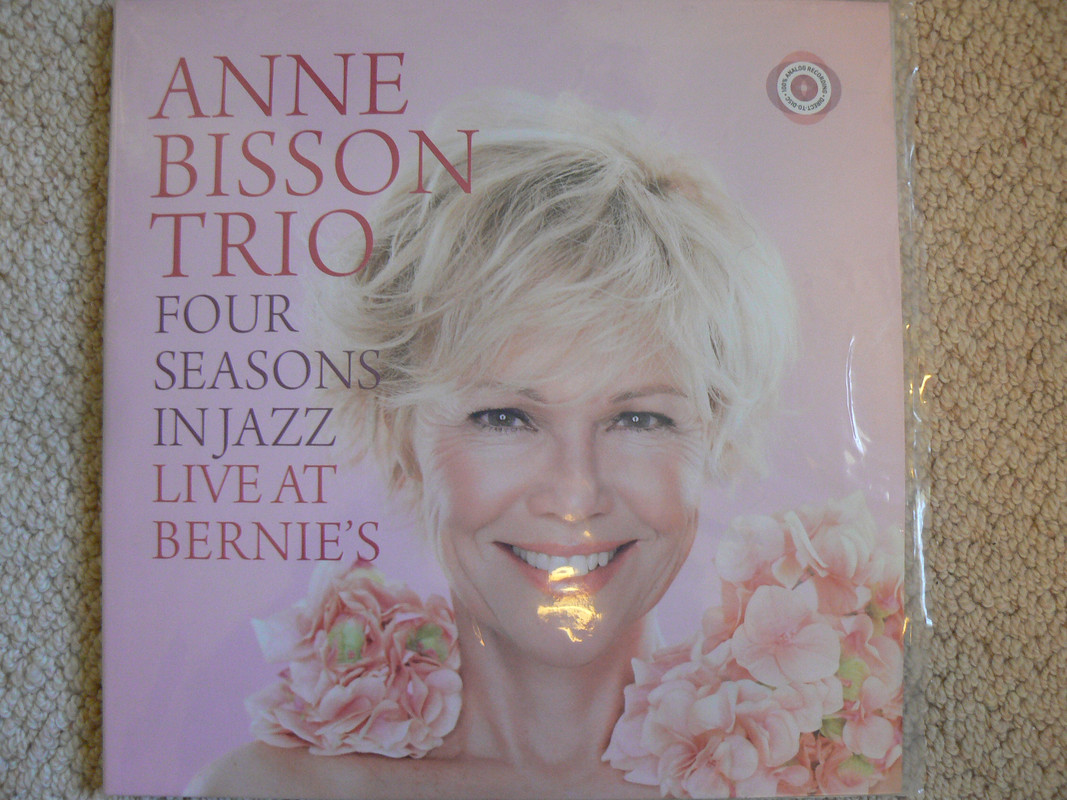
This album is both a direct-to-disc and a 45 RPM, which means it has a greater sonic potential than any other LP format, now or ever before. It is also all-analogue as well and mastered by Bernie Grundman, so the expectations for this record could not be higher, which is why I decided to give this album extra prominence.
The sonics are indeed outstanding overall, with exceptional immediacy, especially of the female voice, and it also has excellent detail and purity. Unfortunately, there are also noticeable sonic problems which keep it from the higher categories. The sound floor is low, but not ultra-low. There is also a lack of natural body, solidity and harmonic bloom, and while the dynamic shifts are good, there is still noticeable compression when compared to the finest records. Direct example...
Just before I played this album, I played the Eiji Kitamura "Swing Sessions", a legendary Japanese RCA Direct-to-Disc from 1978 (KITAMURA-SWING SESSIONS-RCA RDCE-10), which is in "The Divinity" of The Supreme Recordings (the highest category). With the exception of pure immediacy, the RCA/Kitamura "wiped the floor" with the Bisson Trio LP. The dynamic qualities and pure naturalness of the Kitamura were simply in another league.
So while this album obviously has excellent sonics, it is ultimately a "disappointment" considering what it could have been. And that was the exact word used by an associate, who purchased the album (at an exorbitant price) and eventually heard it (and the Kitamura) with me during his annual visit. On a positive note...
I've read some reviews of this album which criticized the pressing as "very noisy", but that was not a problem we experienced. The pressing was excellent and never an issue for either of us (though we did not play all four sides).
Bottom Line & My Advice - I would not pay serious money for this album if the primary goal is to experience the highest level of sonics from a phono source. There are simply too many other records that are superior to it in overall sonic results, despite their far less imposing pedigree and ambitions.
A record made famous by being on the TAS list for many years and deservedly so. The original "Shaded Dog" pressing was excellent, but this is much better. It is cleaner, quieter, more dynamic and with much quicker transients. This is very important when you consider that this is an all percussion ensemble. The original, which I have, has a bit more natural ambience and decay, but no where near enough to tip the scales in its favor. This LP is so immediate and alive sounding that you think it was recorded within the last year and not way back in 1958, ditto with the RCA Bob and Ray record.
This was a well known demonstration disc from the late 1970s. It is superb in every way, with incredible presence and dynamic qualities. The music is "rough and tough" like the group's name. It was a successful direct-to-disc, which means there's only a limited amount of pressings, probably around 5,000. The reissue, on True North, is also very good, but it's not up to the sonic standards of this list. That is the same story with the group's other True North records, 3 of which are still on the TAS list. This LP is not in big demand.
Umbrella also made a Mozart Direct to Disc LP, but it was not very successful. The sound has an unnatural tonal balance which is unpleasant at times, along with some other noticeable problems.
When this record came out in the early 1980s, it was a "must have", and virtually everyone eventually became tired of it from the overplaying, both from home and store demos. The vocal cuts are alternated with purely instrumental, I assume to give Amanda McBroom's voice some rest. Remember, this was a direct-to-disc record.
The sound is outstanding in almost every way. McBroom is recorded further back than usual, so there is a slight loss of immediacy. The sound-floor is excellent, but not outstanding. The purity and speed are incredible, as should be expected.
(Some audiophiles have claimed that the earliest pressings, those in the album box, sound better than the later pressings, even though they are all direct-to-discs. I don't know if their assertions are correct or not.)
FURTHER NOTES: Amanda McBroom has two other well-known albums. One more on Sheffield Lab, West of Oz, and another one on Gecko Records, titled Dreaming. The Sheffield is similar in sound to the original above. The Gecko is a more traditional recording with synthesizers. For readers who want just one Amanda McBroom LP, I recommend the Gecko. It has more of her finest songs, more mature and confident interpretations, more sophisticated and interesting arrangements and the sonics are also excellent.
This was one of the earliest direct-to-discs from Sheffield, and it was played to death in the mid to late 1970s. The title song is probably the most famous and well-played cut ever produced by Sheffield. Its only "rival" is "The Rose" by Amanda McBroom. Like the McBroom LP, this record alternates between vocal and purely instrumental cuts, to rest the singers.
The sonics are very impressive; with outstanding presence, detail, dynamic contrasts and impact, especially in the mid-bass. The only serious downsides are the somewhat "dry" and "incomplete" reproduction of the harmonics, space, decays etc. This keeps this record from the top two classes.
There was a re-issue, by Sheffield, of this popular LP that wasn't a direct-to-disc, but it didn't have the same "special" qualities. It lost both immediacy and impact. This record shouldn't be too difficult to find.
Caveat- Watch out for the condition - I was literally serious when I wrote above that they were "played to death".
TopThis is one more popular LP that has recently been reissued by ORG. However, unlike all the previous records from ORG that I've auditioned, this time I do have an (excellent) original pressing, and it is even in The Honorable Mentions. This is what I observed with this reissue (which was also verified by an associate)...
This ORG reissue is also successful. In a direct comparison with an original pressing (Deadwax- "Masterdisc-BK") in mint condition, the ORG reissue is noticeably cleaner, less homogenized and more natural. It also retains finer details and a greater sense of the real performance space, which is particularly critical with this (live) recording. Further, I believe most of the sonic improvements I heard came from simply a superior mastering (everything else being equal), in contrast to those you would also gain when going from 33 to 45 RPM. Needless to say by now, the ORG pressing itself is once again superb, meaning it's "dead quiet".
What to do? The original pressing is still excellent, and will satisfy most listeners, but if this album is a reader's real favorite, this ORG reissue must not be missed. This is especially true if a "natural" sound is appreciated and desired, rather than the alternative provided by the original pressing, which is "spectacular" and/or "hyped", though still a lot of "fun".
This LP was available new up until recently. It is already a "collector's item". The reason for the unprecedented speed is that this record is amazingly good. It is simple music, one voice and two instruments, recorded in a simple manner. The transparency and immediacy of the sound, as well as its pure naturalness, is breathtaking at times. It also excels in the capturing of the decays within the recording studio. Even the dynamic qualities are superb.
The only important downside is the variability in Waters' voice. It appears that the relative position of the microphone and Waters is continually changing. This can be disconcerting at times, but if you like this type of music, or the artist, this LP is a "must". It has short recording times.
COMPARISONS: I haven't heard any of the rare original pressings, but the Chess reissue was not as good as the Mobile Fidelity.
This is one of the most famous (and expensive) Mobiles from their initial 1980s release of LP reissues. It is also one of their most successful. It is superior to all the other pressings of this record. It is cleaner, more transparent and more dynamic than any of its competitors. (The second best is the German reissue from a few years back.) This is just a superb recording, but it has become a "collector's item". Fortunately, even the domestic pressings are still very good, but, unfortunately, only the Mobile makes this list.
This LP is a simple recording of one voice and a couple of instruments; very similar to the Muddy Waters LP above, but more intimate. It is recorded in a smaller studio, more closely miked and is very upfront. It is stunningly immediate and has incredible inner detail. If you like "the Blues" or are just curious, this is the record to get. The only sonic negative is that the sound of Hopkins' voice is noticeably "dry", which keeps the record from the top two classes.
This is a 2-LP set of a series of live performances by the Jazz ensemble, Oregon. Two of the performances are in Quebec, Canada, and the other is in Carnegie Hall. The music is mainly selections from their earlier records, with some new material. The sound quality on all 4 sides is outstanding. This album was almost a contender for the title of "Finest recording of a live performance", along with the two Belafonte albums and the Weavers.
The sound is very immediate and alive. The dynamics are explosive and the speed of the transients is almost without precedent. This is very important because the music utilizes a variety of percussion instruments. The sound-floor is also very low. The tonal balance is not equal to its two "competitors" mentioned above, but it's not as important with this music because of the lack of voices etc. I listened to this set very recently and I ended up putting on all 4 sides, usually with my mouth open in disbelief at what I was hearing.
The only important negative is that the sound is lean and bright at the beginning of the first two sides, but is more natural and full-bodied after the first few minutes. Sides 3 and 4 sound a little more natural and also capture more of the (Carnegie) hall space. Even the audience's applause sounds more like real life. This set was discontinued years ago, but I still see it on occasion. A true audiophile treasure and a real "sleeper", but very unusual music. My U.S. pressing has MASTERDISK in the stamper area.
FURTHER NOTES: Oregon also had an earlier "live" album, Vanguard VSD-79358. It originated from 1975 and it is analog. It is also excellent and recommended if you enjoy the above album.
I didn't need my distant Italian heritage to translate the label to "The Giants of Jazz". The pressing is also from Italy, which almost always spells trouble for audiophiles, because most Italian pressings are awful, with a capital A. Of course this is "The Exception", or it wouldn't be here in the first place.
This pressing is phenomenal; very full bodied, dynamic and transparent. The horn just fills the entire room. I've heard other pressings in this series and they have all been very good. They sold new for less than $ 5. This label is a real sleeper, and jazz lovers shouldn't pass them up, especially considering the tiny monetary risk.
I've heard this famous album many more times than I care to remember. It was a mainstay in the 1980s. You couldn't avoid it. Personally, I heard it so many hundreds of times, that I really don't want to hear it ever again.
The sound is superb, and it would be near the top except for the ill-defined bass and the percussion shifting from channel to channel, and sometimes in both at the same time. The rest is true reference grade; the horns, the piano and xylophone or all as good as it gets.
There is an on-going dispute about which pressing is the best. I can't say because I've never heard them all at the same time, and don't care to at this point. They are all worthy of this list. The ATR is only a single "highlights" LP, while all the originals are two LPs.
The L.A.4 consisted of four jazz musicians: Bud Shank, Laurindo Almeida, Ray Brown and Shelly Manne. They came out with a series of LP's back in the 1970s and 1980s, though sometimes the personnel changed. This LP has a description on it called "direct-cutting", which I assume means direct-to-disc. The main title, the Pavane, is based on Ravel's famous composition.
The sonics are mainly superb, sometimes stunning. Alemida's guitar almost sounds like it is in the listening room. The saxophone, flute and percussion are also well captured, but Ray Brown's doublebass sounds veiled and distant. Because all the instruments are not in the same room, there are other sonic problems that keep this from the top. This LP has been in constant demand for 25 years.
Another direct-to-disc LP from the same group above, except Jeff Hamilton replaced Shelly Manne on drums. It is also outstanding, with the purity, dynamics and detail expected from eliminating the tape. The only serious problem is that it is also "dry", especially noticeable with the saxophone. This will keep if from the top two classes. This record is not as in demand as the East Wind Pavane listed above, though the sonics are comparable.
Another superb direct-to-disc from Sheffield, which was recorded back in 1983. Adam Makowicz was born in Czechoslovakia, though he studied in Poland in the Classical tradition before turning to Jazz. On this record, he has a talented group of musicians joining him, including Phil Woods on Saxophone. Almost all of the compositions are by Makowicz himself, and there is also a good variety of instrumentation.
The sound is very natural and full bodied. It also has the special purity and immediacy you expect from a good direct-to-disc. Compared to the finest of its kind, it does fall noticeably short in the precision, focus and separation of the instruments. The recording venue is also not as well captured, and neither are the decays. These problems, while not really "serious", will still keep this record from the top two classes.
TopVital Records is a division of Vacuum Tube Logic (VTL), who put out around a dozen records at the beginning of the 1990s. All of them sound very good to excellent, but this one is electrifying.
The music is Caribbean in nature and has a lot of variety. The instruments are almost all percussive. The music was recorded in a custom made studio. The sound is transparent and natural, but the real strengths are in the bass, precision of attack and the phenomenal dynamics. This is a two record set, but the sides are short and the presentation is just awful, with no information even on the spine. However, there are short descriptions of the music.
Now for something very different from the usual Western music on the list. These are authentic chants from Tibet. However, they are not Buddhist, but instead are called Bonpos. The chants consist of men only with deep, resonant voices and with no real leader. They all shift their tones just like a large flock of birds changes direction without knowing who actually initiated the move. There is also a cymbal-like percussive instrument that "clangs", and their version of a bass drum.
The sonics are phenomenal, and because of the nature of the music, it is a reference recording for bass reproduction. The voices require one type of system accuracy, while the bass drum, which sounds like a sledge hammer, requires another. It also excellent as an aid in finding the right crossover point: The higher-the better the bass drum impact; the lower-the more natural the voices. The music is either boring or hypnotic depending on your tastes. It is rare, sadly.
NOTICE: Another OCORA LP (558607) is similar to this, with chanting etc. It is called The Harmonic Choir: Hearing Solar Winds. It is on the TAS record list. The voices are Western and it has a "New Age" feel to it. I like it, but it is no sonic masterpiece, and it's not even close to the Tibetan LP, even forgetting the bass drum. Don't pay big bucks for it if you are expecting a "super" record. You will be disappointed.
Further- There is another LP from Ocora entitled "Tibet: Music Rituelle (OCR 49)". The music is highly unusual, and will even sound bizarre to some listeners (like a chaotic traffic jam). Unfortunately, the sonics aren't that good, which is rare for this label.
Iganacio Alderete is a harpist from Paraguay, who has played around the world since 1950. He started the group, Cochabamba, but this time he is performing as a soloist, with the accompaniment of a guitar and double bass. The harp he plays is Paraguayan, which derives from the "Classical" harp, but it's lighter, diatonic, without a pedal and has a large "resonance box". All these factors contribute to its novel sound. The "tunes" on this LP are Paraguayan, including "El Condor Pasa", made famous by Paul Simon.
The sonics are outstanding. The performers are very up-front, detailed and immediate, though there is no real sense of depth. There is good ambience, harmonic structure and decay, but the performers are more in the listening room, in contrast to entering their space. It is a "big sound", with excellent dynamic qualities, and it is also clean, though sometimes you sense there is a (relatively) slight smear on the plucking, compared to what would be heard on a direct-to-disc. This record will be difficult to find.
FURTHER: Pierre Verany made a series of records of authentic South American music. All of them are sonically excellent, with the immediate, detailed, dynamic and up-front sound that this label is well known for. Unfortunately, the other records I heard were all "dryish"; subtracting ambience and harmonic colors. They still are most desirable, and highly recommended, for enthusiasts of this music.
Papa Susso, as a youth, was trained to be both an educated, western oriented businessman and a "jali", which, in African tradition, was a combination of a court advisor and a minstrel. A jali was the only person who could criticize the ruler without fear of retribution and, unlike "the fool" in Western culture, the jali was very respected by both the rulers and the ruled. Papa Susso, after an unsatisfying stint as an accountant, went back to his family tradition, where he has since found personal satisfaction and even financial success. He performs by himself, with the Kora, an instrument that is a combination of a harp and lute, and his distinctive voice.
The sonics are very immediate and detailed. You hear the acoustic space, ambience and decays. The sound is also natural, harmonically complete and dynamic, especially Susso's voice, which is on the verge of "shouting". The only problem is that the engineers, trying to stretch the envelope, went just a little too far, so there is an occasional strain on the voice, but it isn't a major problem.
FURTHER: There is another record of authentic African music on the Water Lily label, it is Lily of the Nile, WLA-AS-11. The performer is Hamza El Din. The sonics are similar, but not quite as good. It is a little "dry", so you don't hear the space and ambience, or even the full harmonics and their decays. It is still excellent and will be in the Honorable Mentions. The music is also simple, but very different, with the voice "droning", which will either be monotonous or hypnotizing. There is also a drum, which is well captured. Hamza El Din made an earlier record as a relatively young man. It is on Vanguard (VSD-79164). It also has very good sonics.
TopThis LP is also on the TAS list. It is a combination of native instruments, voices and synthesizers. It is very transparent, with a huge soundscape, excellent dynamic qualities and unusual instruments, including large bass drums. This kind of LP can be used to both "blow you away", while still having some musical and sonic subtleties to enjoy.
The key to appreciating its sonic qualities is a system which can both create a large soundstage and separate the many "layers" and instruments, without any sense of homogenization. It was popular. There is also a German pressing of this recording that is supposed to be even better, but I haven't heard it yet.
FURTHER: For those readers who really enjoy this record, I also recommended another LP with similar sonics, "feel" and music, though it's without the "South American" influences. It is another soundtrack: The Clan of The Cave Bear-Varese 81274. It has a big, dynamic sound, synthesizers, voices and large drums. The music isn't quite as interesting and it is sometimes repetitive. The composer is Alan Silvestri. I like it and use a couple of the cuts, near the end of Side One, as demos. It is now in The Honorable Mentions. The star of the movie, actress Daryl Hannah, is on the front cover with "warrior" makeup.
This is the first time I have put two records in only one position. I did so because they are very similar and, in fact, should be considered as a 2-LP set. The sound is typical Phase 4, meaning very upfront with unusual and unnatural imaging, but their other qualities are so exceptional; the immediacy, stunning dynamics, detail and overall naturalness, that these LPs must stick out from the other LPs in this series.
The Decca versions of these LPs are on the TAS list and, in this instance, are slighlty preferable to the London versions. This is because the Decca engineers were requested to equalize the (Phase Four) Londons to sound more "hi-fi" for the North American market. The Dutch pressings are also phenomenal and essentially equal to the English.
If you are looking for something that is "Spectacular!", your search has ended.
FURTHER NOTES: There are other Bernard Herrmann records on Decca and London that sound just as good, but with extra variety. They are London SPC21177, SP44126, SP44144 and SPC21151 (I don't have the Decca equivalent numbers). They include the music from Psycho, Vertigo, Jane Eyre etc. There will be some unavoidable duplication of music. These records are an indispensable set for soundtrack music lovers and audiophiles. Once again, the Decca pressings are preferable.
The Mobile Reissue- There was a reissue of The Fantasy Film World LP by Mobile Fidelity. We have heard it. It is excellent, but it's not the equal of the earlier pressings by Decca above. It is somewhat veiled and compressed in comparison.
This is a one-of-a-kind LP. The music varies from Medieval to 20th Century, and the sound also varies from "above average" to "jaw dropping". The music comes from the now 30-year-old movie, Moliere, which focused on the adult life of the French genius who created modern comedy. (His plays are preferable to the movie.)
The 16 cuts on this record are all very different and in no particular order, except that Moliere's death is at the end. The composers are variously famous, obscure or anonymous. The best of the selections are competitive with any LP, but they're only 30% of the total. I've seen a few copies of this record, so I don't think it is that rare. There is no demand for it.
TopThe Complete List of THE SUPREME RECORDINGS
The Descriptions and Awards of THE DIVINITY
The Descriptions, Awards and Essay of THE DEMI-GODS
The Descriptions and Award of THE BASIC LIST-ANCIENT MUSIC & SMALL SCALE CLASSICAL
The Descriptions of THE BASIC LIST-LARGE SCALE ORCHESTRA & OPERA
The Descriptions, Award and Essays of THE BASIC LIST-ESSAYS & CONTROVERSIES
Some Descriptions and Essays of THE HONORABLE MENTIONS
Some Descriptions of INTERESTING RECORDINGS
The Alphabetized Classical Music Supreme Recordings
Purchasing Used Classical Records
If you have a question, or want audio advice and/or consultation:
Important Notice- As of October 1, 2012, there is a minimum fee of $ 10 for me to answer a simple enquiry, which means any question that I can answer quickly without research. Anything else will cost more and I will accordingly provide quotes for approval. PayPal is being used for its convenience, universality and security. If interested, click on "Ask Arthur".
There are two exemptions to the payment fees. 1. Those readers who have provided an important service (usually information that was posted) to this website over the years. 2. Those situations where I feel that I overlooked something important and/or was obscure in my post, and thus some necessary clarification is required on my part. That will always be gratis. I don't believe in being unfair or petty, especially to my own readers.
Telephone Conversations- If a reader feels it is necessary to actually talk to me directly, this can be arranged if I also feel it is appropriate. There will be a minimum fee of $ 50. Ask for the details before paying the fee.
Finally, a veteran reader wrote that I "should also have a link for (generic) donations to keep the website going". I replied that the Donation button can also be used by appreciative readers for that purpose. Needless to say, any unsolicited donation from a generous reader receives my sincerest thanks and gratitude.

To contact me for any other reason:
COPYRIGHT 2000-2023 ARTHUR SALVATORE